

Dubai is a city where the impossible becomes reality, and nowhere is this more evident than at Global Village Dubai. As we step into 2026, the 30th Anniversary Season (Season 30) has elevated this multicultural phenomenon to new heights. For travelers, expatriates, and families, Global Village isn't just a theme park; it is a 17.2 million-square-foot journey across continents, all within a single evening.
Whether you are a first-time visitor or a seasoned regular, this comprehensive guide covers everything you need to know about Global Village Dubai 2026, from ticket prices and timings to the latest attractions and travel tips.
Global Village is a seasonal cultural and entertainment destination that brings together over 75 countries under one roof—or rather, under the vast Dubai sky. Operating as an open-air theme park and shopping destination, Global Village transforms into a vibrant celebration of world cultures each season, typically running from October through April.
Since its inception in 1997, Global Village has evolved from a modest shopping and cultural event into a massive entertainment complex spanning over 1.6 million square meters. The venue attracts millions of visitors annually, making it one of Dubai's top tourist attractions and a testament to the emirate's commitment to cultural diversity and international harmony.
What makes Global Village truly unique is its concept: each participating country operates its own pavilion, designed to reflect its architectural heritage and cultural identity. Visitors can browse authentic handicrafts from India, sample Turkish delicacies, purchase Italian leather goods, and enjoy African dance performances—all in one evening. It's essentially a world tour without the jetlag.
The 2025-2026 season typically launches in late October 2025, with opening ceremonies featuring special performances, fireworks, and celebrations. The season runs through mid-April 2026, spanning approximately 165-170 operating days.
Weekly Operating Pattern:
Saturday through Wednesday:
Thursday (Weekend Eve):
Friday (Weekend Prime):
Maintenance Day: The park closes one day weekly (typically Monday or Tuesday mid-week) for thorough maintenance, restocking, and operational preparations. This closure ensures facilities remain in optimal condition throughout the demanding season.
UAE National Day (December 2): Extended hours, special programming, Emirati cultural celebrations, fireworks displays, and patriotic entertainment. Expect maximum attendance.
New Year's Eve (December 31): The park typically opens in the afternoon and operates until 2:00-3:00 AM, featuring countdown celebrations, special performances, fireworks, and festive atmosphere throughout. This is the busiest night of the entire season.
Chinese New Year (Late January/Early February): Special programming in Asian pavilions, dragon dances, traditional performances, and cultural demonstrations. Extended evening hours may apply.
Ramadan Period (February-March 2026): Operating hours shift significantly during the holy month. The park typically opens after Iftar (breaking fast), around 8:00 PM or 9:00 PM, and operates until 1:00 AM or 2:00 AM. Special Ramadan tents, traditional foods, and evening entertainment cater to fasting visitors. The atmosphere becomes particularly magical during this period, with a unique blend of reverence and celebration.
School Holidays and Peak Periods: During UAE school holidays (typically mid-December through early January, and mid-March), expect significantly higher attendance, longer wait times for rides, and more crowded pavilions. Plan accordingly with early arrival and strategic navigation.
The remarkably accessible entry fee structure reflects Global Village's commitment to inclusive entertainment:
On-Site Purchase:
Season Pass Options: While not heavily marketed, inquire about multi-visit passes for residents planning frequent attendance throughout the season. These may offer value for families intending weekly or bi-weekly visits.
Group Bookings: Large groups (schools, corporate outings, tour groups of 50+) can arrange special group rates and dedicated entry arrangements. Contact Global Village's group booking department at least two weeks in advance for coordination.
VIP Parking (AED 50): Located immediately adjacent to main entrances, reducing walking distance from 10-15 minutes to under 2 minutes. Particularly valuable for families with small children, elderly visitors, or those with mobility considerations. Spaces are limited and fill quickly on weekends.
Fast Track Entry: During select peak periods, premium fast-track entry options may be available, allowing bypass of regular ticket queues. Pricing varies by demand.
Private Shopping Experiences: Some pavilions offer after-hours private shopping arrangements for serious buyers or VIP clients, typically through direct pavilion contact and negotiation.
At AED 25, Global Village offers extraordinary value:
While entry is affordable, comprehensive enjoyment requires additional spending:
Asia's diverse representation forms Global Village's largest and most vibrant section, reflecting the continent's cultural richness and commercial vitality. The Asian representation is particularly strong, with pavilions from India, Pakistan, China, Thailand, Philippines numerous other countries. The Indian pavilion typically showcases textiles, handicrafts, jewelry, and spices, while the Chinese pavilion features electronics, toys, and traditional items. Southeast Asian pavilions offer unique products ranging from batik fabrics to herbal remedies.
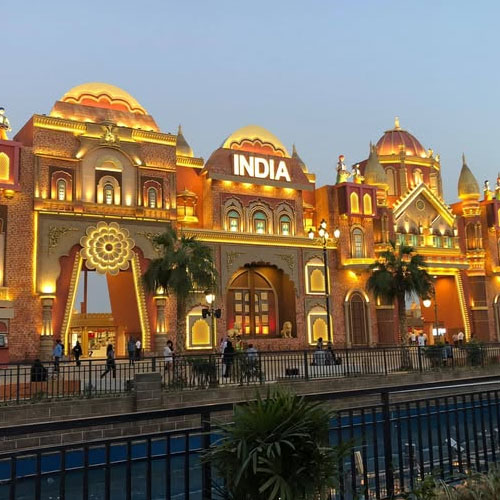
The Indian pavilion typically ranks among the largest at Global Village, reflecting India’s vast diversity. Architecturally inspired by Rajasthani havelis with intricate jali screens or South Indian temple gopurams adorned with stucco deities, the structure immediately signals its cultural identity through vibrant colors and sculptural abundance.
What You’ll Find:
Textiles: Banarasi silk sarees with gold zari brocade requiring 15+ days per piece, Chanderi cotton with translucent texture, Bandhani tie-dye from Gujarat with 50+ dot patterns specific to community origins, Pashmina shawls from Kashmir with 12-micron fibers (finer than human hair), Kanchipuram silk with temple motifs.
Jewelry: Kundan setting with uncut diamonds in gold foil, Meenakari enamel work with 12-color palette requiring multiple firings, Temple jewelry with deity motifs specific to South Indian shrines, Silver jhumkas (dangling earrings) with oxidized finishes.
Handicrafts: Marble inlay work (pietra dura) with semi-precious stones fitted without adhesive, Dhokra tribal metal casting using lost-wax technique unchanged since Indus Valley Civilization, Madhubani paintings with natural pigments on handmade paper, Wooden elephants from Karnataka with sandalwood inlay.
Spices: Garam masala blends with regional variations (North Indian emphasis on cinnamon versus South Indian emphasis on curry leaves), Kashmiri saffron with ISO certification, Alleppey turmeric with high curcumin content, Malabar black pepper with protected geographical indication.
Ayurvedic Products: Chyawanprash herbal jam with 40+ ingredients including amla (Indian gooseberry), ashwagandha supplements for stress relief, neem soap with antibacterial properties, sandalwood oil for meditation.
Food: Chaat counters serving pani puri with tamarind-mint water, bhel puri with puffed rice, and sev puri with chickpeas; tandoori sections offering naan baked in clay ovens and seekh kebabs with minced meat; South Indian counters with dosa (fermented crepes) and idli (steamed cakes); sweet stalls with gulab jamun (milk-solid dumplings), jalebi (swirled batter), and kulfi (dense ice cream).
Shopping Tips: Prices are negotiable. Start at 50-60% of asking price for textiles and work up. Fixed-price items like packaged spices have minimal negotiation room. Quality varies significantly—inspect textiles for colorfastness (rub hidden area with damp cloth) and stitching quality (check reverse side for loose threads). Kashmiri pashmina should feel cool to touch; synthetic blends feel warm.
Cultural Performances: Classical Indian dance—Bharatanatyam from Tamil Nadu with precise footwork and hand gestures (mudras), Kathak from North India with rhythmic footwork and spins; Bollywood dance performances with contemporary choreography; occasional kathputli (string puppet) shows from Rajasthan; traditional music on tabla (drums) and sitar (string instrument) with raga improvisations specific to time of day.
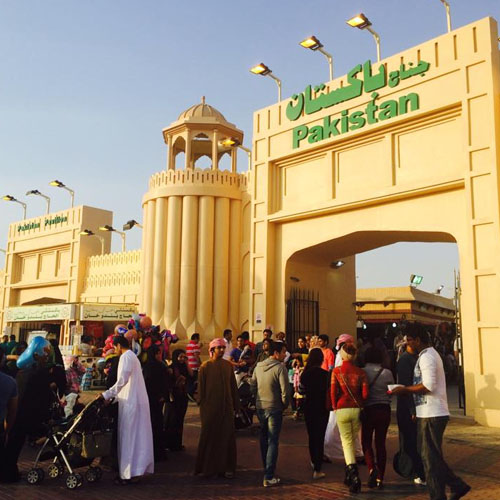
Architecturally evoking Lahore’s Wazir Khan Mosque with kashi kari tilework in cobalt blue and emerald green, Multan’s blue pottery tradition, and Swat Valley’s wooden architecture with carved balconies, the Pakistan Pavilion showcases South Asia’s Islamic artistic zenith where Persian, Central Asian, and Indic traditions fused into distinct Pakistani aesthetics.
What You’ll Find:
Textiles: Multani khaddar (handwoven cotton) with natural dyes, ajrak block printing from Sindh with indigo and madder root dyes creating geometric patterns specific to village origins, Phulkari embroidery from Punjab with silk thread on cotton requiring 200+ hours per shawl.
Handicrafts: Kashi kari tilework with Persian-inspired floral patterns requiring 100+ hand-cut pieces per square foot, camel bone inlay work from Punjab with geometric patterns, papier-mâché from Kashmir with mineral pigments applied in 30+ layers.
Spices: Garam masala blends with regional variations (Punjabi emphasis on cumin versus Sindhi emphasis on coriander), anardana (dried pomegranate seeds) for chole, kasoori methi (dried fenugreek leaves) essential to sarson ka saag.
Food: Nihari (slow-cooked beef stew with bone marrow) served at dawn traditionally, biryani with regional variations (Karachi’s spicy style versus Lahore’s milder version), halwa poori breakfast with chickpea curry, samosas with proper flaky pastry, lassi with mango or salted variations.
Shopping Tips: Authentic ajrak features hand-blocked irregularities—screen-printed pieces show perfect uniformity. Multani blue pottery should display cobalt variations; uniform color indicates modern production. Bargaining expected (start at 60% of asking price) but maintain respectful demeanor—Pakistani vendors appreciate knowledge about regional craft origins.
Cultural Performances: Qawwali Sufi devotional music with harmonium and tabla reflecting Chishti order traditions, bhangra folk dances with Punjabi agricultural rhythms, kathak classical dance with Persian-influenced footwork patterns, poetry recitals featuring Allama Iqbal verses with cultural context about Pakistan’s philosophical foundations.
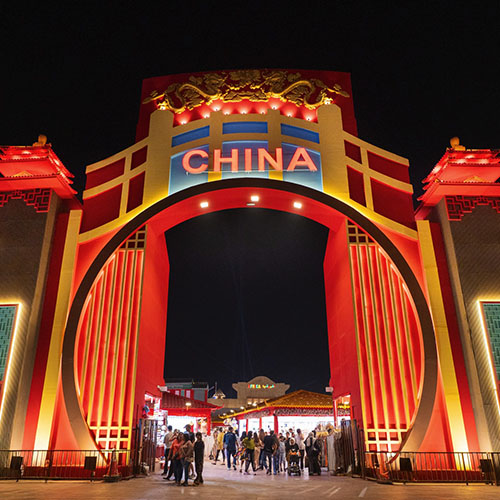
Architecturally evoking Beijing’s Forbidden City with vermilion pillars, upturned eaves symbolizing prosperity, and Suzhou garden rockeries representing miniature landscapes, the China Pavilion showcases 5,000 years of uninterrupted civilization through rotating dynastic spotlights—Tang poetry week, Ming porcelain week, Qing silk week.
What You’ll Find:
Silk: Hangzhou silk with 12-micron threads (finer than human hair), Suzhou kesi tapestry weave requiring 300+ weft threads per inch, Yunnan ethnic minority textiles with batik techniques specific to Bai and Dai peoples.
Porcelain: Jingdezhen blue-and-white porcelain with cobalt underglaze techniques unchanged since Yuan dynasty, cloisonné enamelware with copper wire partitions filled with colored glass, celadon with crackled glaze symbolizing ice thawing in spring.
Tea Culture: Premium Longjing (Dragon Well) green tea from Hangzhou with flat leaf shape, Pu-erh fermented tea aged 10+ years with earthy aroma, tieguanyin oolong with orchid fragrance. Artisans demonstrate Gongfu tea ceremony with precise temperature control.
Handicrafts: Cloisonné enamelware with copper wire partitions, papercutting with single-sheet designs requiring 100+ precise cuts, lacquerware with 30+ layered applications requiring months per piece, shadow puppets with donkey hide carving techniques.
Food: Peking duck with proper thin pancakes and hoisin sauce, xiaolongbao (soup dumplings) with gelatinized broth interior, mapo tofu with Sichuan peppercorn mala (numbing-spicy) sensation, dim sum with proper steamed texture, mooncakes during Mid-Autumn Festival periods.
Shopping Tips: Authentic Jingdezhen porcelain should ring with clear tone when tapped—dull sound indicates inferior clay. Hangzhou silk should feel cool to touch with subtle luster; synthetic blends feel warm. Fixed pricing prevails for certified items—bargaining inappropriate for culturally significant crafts.
Cultural Performances: Rotating dynastic showcases—Tang dynasty court dances with flowing sleeves, Peking opera with regional styles (Beijing versus Cantonese), bian lian (face-changing) Sichuan opera with masks swapped in milliseconds, erhu two-string fiddle performances with microtonal scales, calligraphy demonstrations with Four Treasures of Study (brush, ink, paper, inkstone).
Architecturally evoking Bangkok’s Grand Palace with golden prasat spires, intricate lai rot nam gilded patterns, and traditional teakwood structures raised on stilts, the Thailand Pavilion immerses visitors in Southeast Asia’s only never-colonized nation’s cultural confidence.
What You’ll Find:
Silk: Jim Thompson Thai silk with distinctive uneven texture (hand-reeled silk worms create natural variations), mudmee tie-dyed silk featuring geometric patterns specific to northeastern Isan region, and pha yok supplementary weft brocade with metallic threads.
Handicrafts: Celadon ceramics with crackled glaze technique perfected in Sukhothai period, mother-of-pearl inlaid furniture reflecting Ayutthaya Kingdom craftsmanship, saa paper products made from mulberry bark using techniques unchanged since Sukhothai era.
Spices & Ingredients: Lemongrass, galangal, kaffir lime leaves, Thai bird chilies, and pla ra (fermented fish sauce) essential to authentic Thai cuisine. Artisans demonstrate mortar-and-pestle curry paste preparation—never pre-ground for authentic flavor.
Jewelry: Silver hill tribe jewelry from northern Thailand featuring hand-stamped patterns specific to Karen, Hmong, and Akha ethnic groups, with each tribe’s motifs carrying cultural meaning (spirals for life journey, dots for stars).
Food: Pad Thai with tamarind-based sauce (not ketchup imitations), tom yum goong (spicy shrimp soup) with proper lemongrass/galangal balance, som tam (green papaya salad) with authentic fish sauce dressing, mango sticky rice with coconut cream, and Thai iced tea with condensed milk.
Shopping Tips: Authentic Thai silk feels slightly rough with visible slubs—smooth texture indicates polyester blend. Celadon should feature subtle crackle glaze; uniform surfaces indicate modern production. Bargaining expected (start at 50% of asking price) but maintain smiling demeanor—Thai culture values kreng jai (considerate restraint) during negotiation.
Cultural Performances: Khon masked dance dramas depicting Ramakien (Thai Ramayana) with elaborate costumes, fon leb fingernail dances from northern Thailand with brass nails creating rhythmic accents, Muay Thai demonstrations with cultural context about wai khru (teacher homage) rituals, and fruit/vegetable carving demonstrations showcasing Thailand’s edible art traditions.
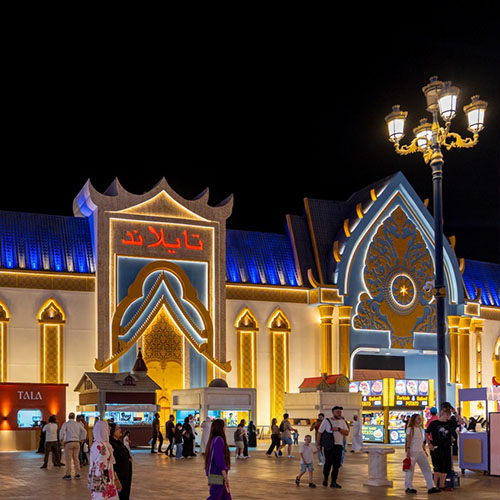
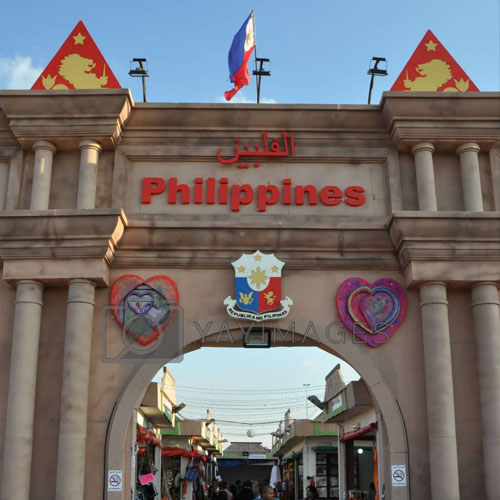
Reflecting Filipino warmth and vibrant culture, this pavilion showcases the archipelago’s diverse offerings.
Featured Items:
What Makes It Special: Filipino pavilion staff are particularly known for warmth and hospitality, often engaging visitors in friendly conversation while shopping.
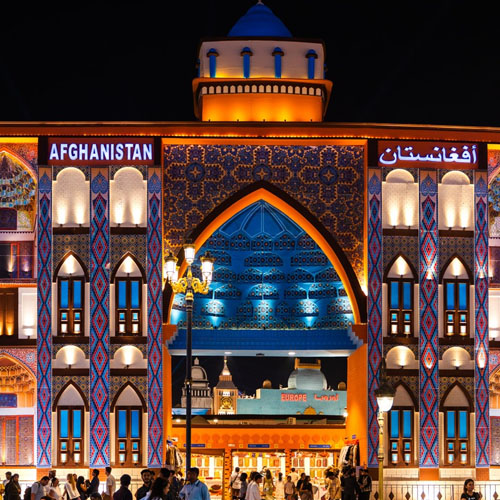
Architecturally inspired by Herat’s Timurid-era tilework and Kabul’s traditional courtyard houses with badgir (wind catchers), the Afghanistan Pavilion showcases Central Asia’s crossroads civilization—Persian literary heritage, Turkic nomadic traditions, and South Asian trade influences—amid contemporary resilience.
What You’ll Find:
Carpet Weaving: Afghan Baluchi carpets with geometric patterns specific to nomadic tribes, Turkmen carpets with gul (elephant foot) motifs denoting tribal affiliation, and Kabuli carpets with Persian-influenced floral designs. Artisans demonstrate techniques requiring 100+ knots per square inch.
Khamak Embroidery: Hand-embroidered textiles with silk thread on velvet using techniques passed through generations of Afghan women. Patterns carry cultural meaning—cypress trees for eternity, pomegranates for fertility.
Semi-Precious Stones: Lapis lazuli from Badakhshan mines (source for Egyptian pharaohs’ jewelry), emeralds from Panjshir Valley, and rubies from Jegdalek mines. Artisans explain geological formation and historical trade along Silk Road.
Handicrafts: Gatch gypsum carving with Islamic geometric patterns specific to Herat’s architectural tradition, copperware engraved with Persian calligraphy, and pakol wool caps with regional variations (Nuristani rolled brim versus Wakhi flat top).
Spices: Qorma spice blends with distinctive Afghan formulations (dried fenugreek emphasis), marjane (sumac) for rice dishes, zama (dried lime) essential to shorba soups.
Food: Kabuli pulao (Afghan national dish—lamb with rice, carrots, and raisins), mantu (dumplings with meat/onion filling topped with yogurt and lentils), ashak (leek-filled dumplings with meat sauce), bolani (stuffed flatbread), and sheer chai (pink salted tea).
Shopping Tips: Authentic Afghan carpets feature hand-knotted irregularities—machine-made pieces show perfect uniformity. Lapis lazuli should display pyrite flecks (“gold dust”) and deep blue color; uniform blue indicates synthetic material. Bargaining expected (start at 50% of asking price) but approach with cultural sensitivity—Afghan vendors appreciate knowledge about tribal patterns.
Cultural Performances: Attan circle dances with regional variations (Pashtun energetic style versus Hazara measured steps), rubab lute performances with microtonal scales reflecting Persian influence, poetry recitals featuring Rumi (born in Balkh, Afghanistan) verses with cultural context.
Countries like Egypt, Morocco, Jordan, Lebanon, and various Gulf states present their cultural treasures. These pavilions often feature intricate handicrafts, traditional attire, perfumes, dates, and regional specialties. The architectural designs frequently incorporate Islamic geometric patterns and traditional building elements.
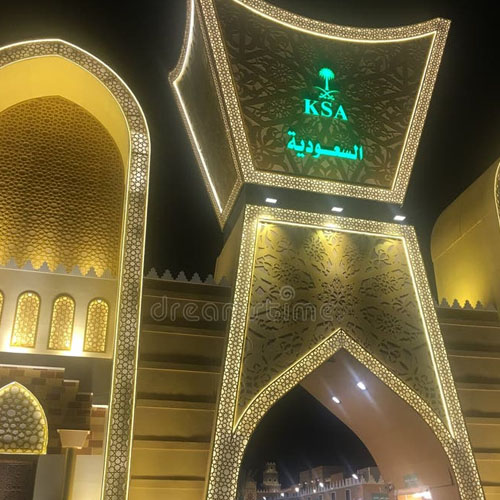
Architecturally inspired by Diriyah’s mud-brick Najdi architecture with geometric patterns (naqsh) and Hejazi coral-stone buildings from Jeddah’s historic Al-Balad district, the pavilion showcases Saudi Arabia’s regional diversity beyond oil wealth—highlighting Red Sea coastal cultures, Najd plateau traditions, and Asir mountain heritage.
What You’ll Find:
Textiles: Bisht cloaks with regional embroidery variations—Najdi geometric patterns versus Hejazi floral motifs, shemagh in distinctive Saudi red-and-white (shemagh shaggi) versus all-white (ghutra) styles, and sadu weaving featuring camel and palm motifs specific to Saudi Bedouin tribes.
Perfumery: Taif roses distilled into attar using methods unchanged since Ottoman times (Taif’s microclimate produces world’s most fragrant roses), oud oil from agarwood aged in Saudi tradition, and bukhoor featuring Hejazi frankincense varieties.
Handicrafts: Al-Qatt Al-Asiri geometric wall paintings from Asir region (UNESCO Intangible Heritage) demonstrated by female artists, sadu weaving with patterns denoting tribal affiliation, palm-frond basketry (mihmar) using techniques unchanged since pre-Islamic times.
Spices: Hawaij blends for Yemeni-Saudi border cuisine, za’atar with thyme varieties specific to Saudi highlands, loomi (dried lime) essential to kabsa spice profile, and premium dates from Al-Ahsa oasis (UNESCO site with 3 million+ palm trees).
Food: Kabsa (spiced rice with meat—Saudi national dish with regional variations), mandi (slow-cooked lamb with rice using underground oven techniques), mutabbaq (stuffed flatbread with meat/vegetables), jareesh (cracked wheat stew), and qahwa (Arabic coffee) with cardamom served in traditional dallah pots.
Shopping Tips: Authentic Al-Qatt Al-Asiri features hand-painted irregularities—machine prints show perfect uniformity. Taif rose attar should emit intense floral aroma without alcohol base; weak scent indicates dilution. Bargaining acceptable on textiles (start at 70% of asking price) but fixed pricing on certified perfumes and dates.
Cultural Performances: Ardah sword dances with regional variations (Najdi rhythmic patterns versus Hejazi coastal styles), mizmar performances featuring double-reed instruments with African rhythmic influences reflecting Red Sea trade connections, and poetry recitals featuring Nabati verse forms unique to Arabian Peninsula oral tradition.
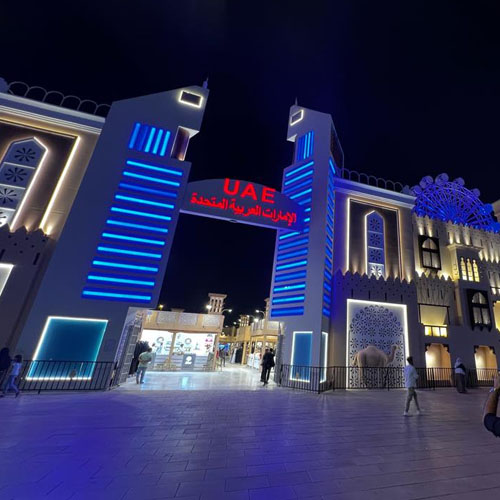
Architecturally evoking Al Ain’s UNESCO-listed aflaj irrigation systems, Dubai’s historic barasti (palm frond) houses, and Abu Dhabi’s Qasr Al Hosn fort with coral stone and gypsum detailing, the UAE Heritage Pavilion serves as cultural anchor—contextualizing Dubai’s rapid modernization within 7,000 years of continuous Arabian Peninsula habitation.
What You’ll Find:
Aflaj Irrigation Models: Working miniature aflaj (UNESCO Intangible Heritage) demonstrating ancient water-sharing principles still governing rural UAE agriculture—water allocated by time not volume, ensuring equitable desert survival.
Date Palm Culture: 40+ UAE date varieties with tasting stations explaining regional differences (Al-Ain’s Khalas versus Liwa’s Barhi), date syrup (dibs) production demonstrations using traditional clay pots, palm frond weaving (khoos) for baskets and mats.
Maritime Heritage: Dhow models built using traditional techniques without nails—planks sewn with coconut fiber rope (markab), pearl-diving equipment displays with hasah diving weights and fataam nose clips, al ghish (pearl sorting) demonstrations with historical context.
Textiles: Sadu weaving with geometric patterns specific to UAE Bedouin tribes (Bani Yas versus Al Qasimi variations), burqa (face masks) with regional metalwork styles, bisht cloaks with gold-thread embroidery denoting social status.
Perfumery: Oud oil distilled from agarwood aged in Emirati tradition, bukhoor featuring Omani frankincense and Emirati floral essences, traditional mabkhara (incense burners) with brass craftsmanship.
Food: Luqaimat (date syrup dumplings) prepared hourly with proper crispy exterior/soft interior, harees (wheat-meat porridge) with slow-cooked texture, machboos with Emirati spice profile featuring distinctive black lime (loomi), khabees (date-wheat dessert), qahwa (Arabic coffee) with cardamom served in traditional dallah pots following precise three-pour hospitality ritual.
Shopping Tips: Authentic sadu features hand-woven irregularities—machine-made pieces show perfect uniformity. UAE dates should feel plump with moist texture; dry/shriveled dates indicate age degradation. Bargaining considered disrespectful—pay asking price to support cultural preservation. Each purchase includes heritage story card documenting craft’s historical significance.
Cultural Performances: Ardah sword dances with UAE regional variations (Abu Dhabi’s measured style versus Ras Al Khaimah’s energetic steps), Fijiri sea music with UAE lyrical themes celebrating pearl diving heritage, Al Razfa folk dances with drum rhythms specific to coastal communities, storytelling sessions in majlis setting explaining Emirati values of hospitality (karam) and generosity (jud).
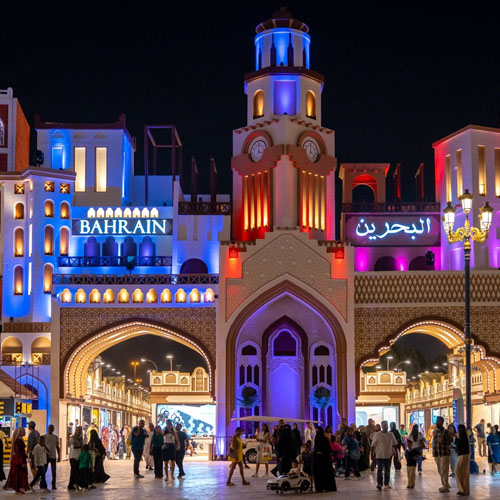
Architecturally inspired by Muharraq’s historic pearling houses and Manama’s traditional barasti (palm frond) structures, the Bahrain Pavilion embodies the island nation’s dual identity as both ancient Dilmun civilization and modern Gulf hub. Whitewashed walls with intricate jali (lattice) screens filter desert light while evoking Bahrain’s UNESCO-listed pearling heritage sites.
What You’ll Find:
Pearling Heritage: Authentic pearl-diving equipment displays, mother-of-pearl inlaid boxes (sadu craftsmanship), and naturally harvested Bahraini pearls—renowned for their rose-gold luster unique to Gulf oysters. Artisans demonstrate traditional pearl grading techniques passed through generations of ghaus (divers).
Textiles: Bisht (ceremonial cloaks) with gold-thread embroidery, thobe fabrics featuring Bahraini floral motifs distinct from Saudi or Emirati styles, and handwoven palm-frond baskets used historically for date storage.
Spices & Dates: Premium Ajwa and Khalas date varieties grown in Bahrain’s 330,000+ palm groves, saffron-infused date syrup (dibs), and baharat spice blends featuring Bahraini black lime (loomi) essential to Gulf cuisine.
Handicrafts: Sadu weaving demonstrations showing geometric Bedouin patterns specific to Bahraini tribes, ceramic pottery using clay from ancient Dilmun sites, and miniature replicas of Bahrain Fort (Qal’at al-Bahrain).
Food: Machboos (saffron-infused rice with fish or chicken), muhammar (sweet date rice), halwa made with rosewater and saffron in copper pots, and fresh luqaimat (date syrup dumplings) prepared hourly at open counters.
Shopping Tips: Bahraini pearls command premium prices—verify authenticity through the pavilion’s certified grading certificates. Sadu textiles vary significantly in quality; authentic pieces feature irregular hand-stitching (machine-made imitations show perfect uniformity). Bargaining acceptable on textiles (start at 70% of asking price) but fixed pricing on pearls and certified handicrafts.
Cultural Performances: Traditional Fijiri sea music performed by former pearl divers using clay pots and drums, Ardah sword dances with Bahraini rhythmic variations distinct from Saudi styles, and Liwa performances featuring African-influenced drumming reflecting Bahrain’s historical Indian Ocean trade connections.
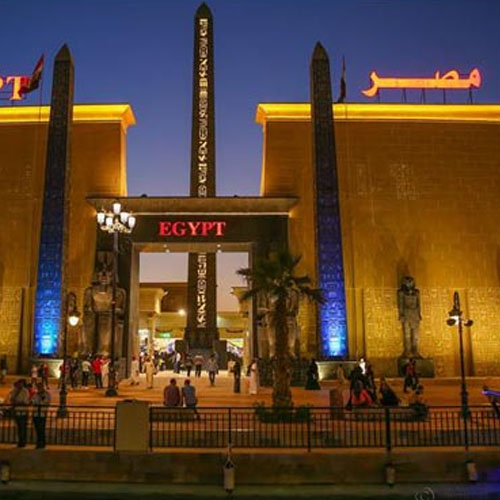
Architecturally evoking Luxor Temple with colossal columns, hieroglyphic cartouches, and papyrus-inspired arches, the Egypt Pavilion bridges Pharaonic grandeur with living Coptic and Islamic traditions—avoiding mummy-centric clichés for authentic contemporary heritage.
What You’ll Find:
Papyrus Art: Handmade papyrus sheets using Nile River Cyperus papyrus reeds processed through ancient 12-step method (soaking, slicing, pressing, drying). Artists paint scenes using mineral pigments—lapis lazuli for blue, malachite for green—following Pharaonic color symbolism.
Alabaster: Geometric vessels and lamps carved from Egyptian alabaster (calcite) quarried near Luxor since Pharaonic times. Artisans demonstrate carving techniques using methods unchanged for 3,000 years, with translucent quality distinguishing genuine alabaster from marble imitations.
Textiles: Sarma embroidery featuring metallic thread couching techniques from Ottoman-era Cairo, melaya leff (traditional wrap) with beadwork specific to Alexandria’s coastal culture, and galabeya (long robe) fabrics with regional variations.
Spices: Dukkah blends with distinctive Egyptian formulations (hazelnut emphasis versus Sudanese peanut versions), hibiscus (karkade) dried flowers for traditional tea, cumin essential to Egyptian ful medames.
Handicrafts: Mashrabiya (lattice screens) with geometric Islamic patterns hand-carved from mango wood, mother-of-pearl inlaid boxes reflecting Fatimid craftsmanship, and khayamiya tentmaker appliqué textiles with Pharaonic motifs.
Food: Koshari (lentil-rice-pasta dish with tomato sauce—Egypt’s national street food), ful medames (fava bean stew) with proper Egyptian spice profile, molokhia (jute leaf soup) with rabbit or chicken, basbousa (semolina cake) with syrup, and sahlab (orchid root pudding) in winter months.
Shopping Tips: Authentic papyrus should feel fibrous with visible reed layers—smooth texture indicates paper imitation. Egyptian alabaster should transmit light when held to sun; opaque pieces indicate marble. Bargaining expected (start at 50% of asking price) but maintain respectful demeanor—Egyptian vendors appreciate historical knowledge about craft origins.
Cultural Performances: Tanoura Sufi whirling dances with colorful skirts representing cosmic orbits, raqs sharqi (Egyptian Oriental dance) with regional styles from Cairo versus Upper Egypt, mizmar folk music with Saidi rhythms from Upper Egypt, and storytelling sessions recounting Pharaonic tales with modern relevance.
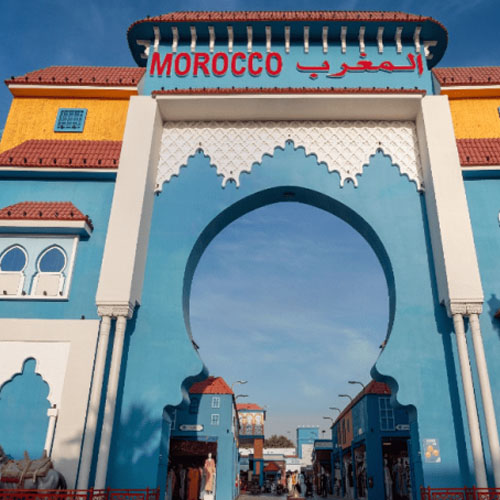
Architecturally evoking Marrakech’s Bahia Palace with zellige tile mosaics requiring 300+ hand-chiseled pieces per square meter, carved cedar mashrabiya screens, and Andalusian courtyard gardens with orange trees and fountains, the Morocco Pavilion immerses visitors in Maghrebi aesthetic sophistication.
What You’ll Find:
Zellige Tilework: Geometric mosaic tiles hand-chiseled from glazed terra cotta using 12-color palette unchanged since Nasrid period. Artisans demonstrate assembly without adhesive—pieces fit through precise geometry alone, a technique requiring 10+ years apprenticeship.
Leather Goods: Babouches (pointed slippers) in vegetable-tanned leather from Fez’s Chouara Tannery (oldest operating tannery globally), hand-tooled leather bags with Andalusian motifs, and selham (woolen cloaks) with hood specific to Atlas Mountain Berber tribes.
Textiles: Caftans with hand-embroidered sfifa (collar trim) requiring 40+ hours per garment, hanbels (Berber carpets) with symbolic patterns denoting tribe and life events (diamonds for fertility, zigzags for water), and foutas (striped towels) with regional color variations.
Spices: Ras el hanout (“head of shop”) blends with 20+ spices ground fresh daily, saffron from Taliouine region (Morocco’s saffron capital), khlii (preserved meat) spice mixes, and bsbasa (fenugreek) essential to tagine preparations.
Handicrafts: Thuya wood carvings from Essaouira using aromatic wood found only in Morocco’s Atlantic coast, fassi blue pottery from Fez with cobalt patterns unchanged since 9th century, and tazouaqt painted wood with geometric Islamic patterns.
Food: Tagine with proper conical lid creating self-basting environment (chicken with preserved lemons/olives, lamb with prunes/almonds), couscous steamed three times for proper texture, pastilla (pigeon pie with cinnamon/sugar), msemen (layered flatbread), and mint tea poured from height to aerate.
Shopping Tips: Authentic zellige features hand-chiseled irregularities—machine-cut tiles show perfect uniformity. Fez leather should emit natural tannin scent without chemical odor; synthetic leather lacks aroma. Bargaining expected (start at 40% of asking price) but maintain smiling demeanor—Moroccan negotiation is social ritual requiring patience and humor.
Cultural Performances: Gnawa trance music with guembri (lute) and metal castanets reflecting West African spiritual traditions, Ahwach Berber dances with synchronized footwork patterns specific to Atlas Mountain tribes, fantasia horseback demonstrations (miniaturized for pavilion space) with gunpowder salutes, and henna artistry with explanations of symbolic patterns.
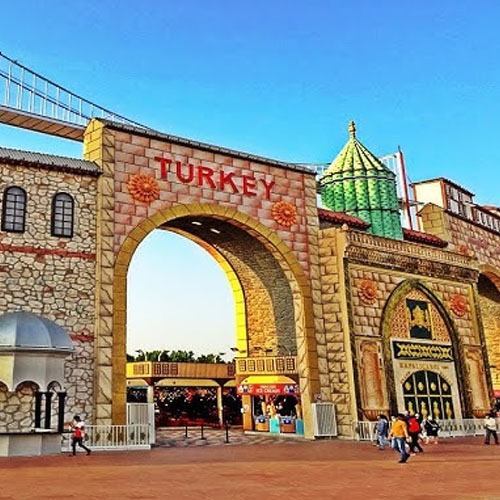
Architecturally evoking Istanbul’s Grand Bazaar with Ottoman-era domes, Iznik tilework in cobalt blue and coral red, and Seljuk-era geometric patterns, the Turkey Pavilion showcases 1,000 years of uninterrupted craftsmanship where Byzantine, Persian, and Central Asian traditions fused into distinct Turkish aesthetics.
What You’ll Find:
Carpets: Hereke silk carpets with 100+ knots per square inch requiring years per piece, Oushak carpets with large-scale geometric patterns favored by European royalty since Renaissance, and tribal kilims with symbolic patterns denoting village origins.
Ceramics: Iznik pottery with coral red underglaze (technique lost for centuries, recently revived), Çini tiles with floral patterns specific to Ottoman palace workshops, and Ephesus-inspired ceramic replicas using ancient Greek techniques.
Textiles: Ottoman-style caftans with gold-thread embroidery requiring 200+ hours per garment, peshtemal (hammam towels) with hand-loomed stripes, and oya needle-lace edging with floral motifs carrying symbolic meaning (roses for love, carnations for pride).
Spices: Pul biber (Aleppo pepper) with distinctive moderate heat and fruity notes, * isot* (Urfa pepper) with smoky-sweet profile, tarçın (cinnamon) essential to Turkish coffee, and menengiç (terebinth) coffee substitute from southeastern Turkey.
Handicrafts: Ebru marbling art with pigments floated on water then transferred to paper, calligraphy with reed pens (kalem) cut at precise angles for Ottoman scripts, copperware hammered by masters using techniques unchanged since Seljuk era.
Food: Kebabs with regional variations (Adana’s spicy minced meat, Urfa’s milder version), lahmacun (“Turkish pizza” with proper thin crust), baklava with 40+ phyllo layers and Antep pistachios, Turkish delight (lokum) with rosewater/pistachio fillings, çay (tea) served in tulip-shaped glasses.
Shopping Tips: Authentic Turkish carpets feature hand-knotted irregularities—machine-made pieces show perfect uniformity. Iznik pottery should display cobalt blue with subtle variations; uniform color indicates modern production. Bargaining expected (start at 60% of asking price) but maintain respectful demeanor—Turkish vendors appreciate knowledge about regional carpet styles.
Cultural Performances: Whirling Dervishes (Sema ceremony) with spiritual context about Mevlevi Sufi tradition, Karagöz shadow puppet theater with Ottoman-era satirical stories, Zeybek folk dances with Aegean regional variations, and ney (reed flute) performances with microtonal makam scales.
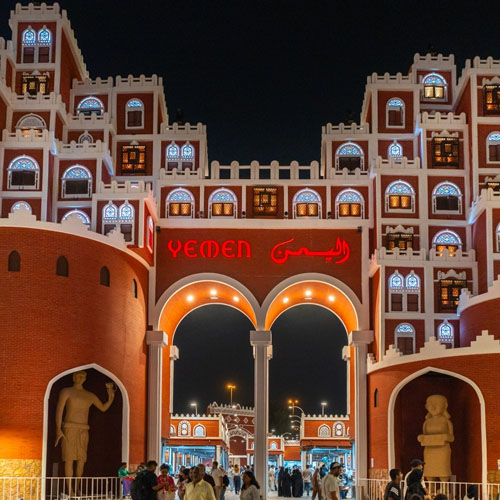
Architecturally inspired by Shibam’s mud-brick skyscrapers (UNESCO site) and Sana’a’s white-and-black geometric facades, the Yemen Pavilion showcases Arabian Peninsula’s oldest continuously inhabited civilization despite contemporary hardships. Every craft demonstrated represents cultural resilience.
What You’ll Find:
Jambiya Daggers: Traditional curved daggers with region-specific sheaths—Sana’a’s silver jambiya versus Hadhramaut’s simpler styles. Artisans explain social significance: dagger style denotes tribal affiliation, social status, and regional origin.
Textiles: Mashlah (woolen cloaks) handwoven in mountain regions using techniques unchanged since pre-Islamic times, futa (wraparound skirts) with distinctive Yemeni check patterns, and shash headscarves with Sana’a floral motifs.
Henna Artistry: Natural henna paste prepared from Yemeni henna leaves (considered world’s finest), with artists demonstrating intricate patterns specific to Yemeni wedding traditions—geometric motifs for brides versus floral for guests.
Spices: Hawaij spice blends with distinctive Yemeni formulations (black cumin emphasis for soup blend, cardamom emphasis for coffee blend), zhug (cilantro-chili condiment) essential to Yemeni cuisine, premium Mocha coffee beans from historic port city.
Handicrafts: Silverwork featuring pre-Islamic Himyarite motifs alongside Islamic patterns, pottery using clay from ancient Marib dam region, and palm-frond basketry with techniques unchanged since Queen of Sheba’s era.
Food: Saltah (Yemeni national dish—meat stew with zhug and fenugreek froth), mandi (slow-cooked lamb with rice using underground oven techniques), bint al-sahn (layered honey cake), and qishr (coffee husk drink with ginger).
Shopping Tips: Authentic Yemeni silver features hand-chased irregularities—machine engraving lacks depth. Yemeni henna should emit earthy aroma without chemical additives; black “henna” indicates dangerous PPD adulteration. Bargaining expected (start at 60% of asking price) but approach with respect—Yemeni vendors appreciate cultural knowledge about regional variations.
Cultural Performances: Bara’a sword dances with distinctive Yemeni footwork patterns, mizmar performances featuring double-reed instruments with African rhythmic influences reflecting Red Sea trade connections, and poetry recitals featuring qasida forms dating to pre-Islamic era.
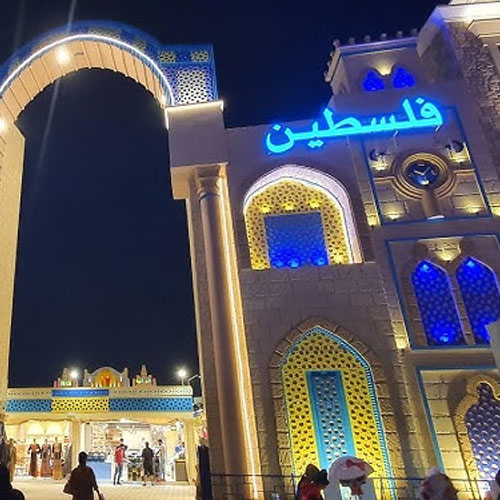
Architecturally evoking Jerusalem’s Old City with Jerusalem stone facades, arched muqarnas vaulting, and olive wood carvings, the Palestine Pavilion serves as both cultural showcase and living testament to heritage preservation amid displacement. The structure incorporates motifs from Hebron, Bethlehem, and Gaza’s distinct architectural traditions.
What You’ll Find:
Textiles: Tatreez embroidery featuring region-specific patterns—Hebron’s cypress trees, Ramallah’s flowers, Gaza’s geometric designs—on thobes (dresses) hand-stitched over months. Each pattern carries historical meaning; the qoutub (crown) motif signifies marital status.
Olive Wood Crafts: Hand-carved nativity scenes from Bethlehem’s 2,000-year-old olive groves, religious icons, and kitchen utensils. Artisans demonstrate carving techniques unchanged since Byzantine times, using wood from trees that cannot be replanted due to land restrictions.
Soap Making: Nablus olive oil soap cubes wrapped in distinctive green-and-white paper, produced using 800-year-old methods in historic Nablus soap factories. Demonstrations show the 40-day curing process essential to quality.
Embroidery Tools: Traditional mishmash (embroidery frames), hand-dyed silk threads using natural pigments (pomegranate for red, saffron for yellow), and antique thimbles passed through generations.
Food: Maqluba (“upside-down” rice dish with eggplant and chicken), musakhan (sumac-spiced chicken on taboon bread), knafeh with Nabulsi cheese prepared fresh hourly, and qahwa (Arabic coffee) with cardamom served in traditional dallah pots.
Shopping Tips: Authentic tatreez features hand-stitched irregularities—machine embroidery shows perfect uniformity. Bethlehem olive wood should feel dense and emit faint olive scent when warmed; lightweight pieces indicate inferior wood. Prices reflect artisan circumstances; bargaining considered disrespectful—pay asking price to support cultural preservation.
Cultural Performances: Dabke line dances with regional variations (Galilee’s energetic style versus Hebron’s measured steps), oud and qanun performances featuring Palestinian maqam scales distinct from other Arab traditions, and storytelling sessions recounting village histories through oral narrative.
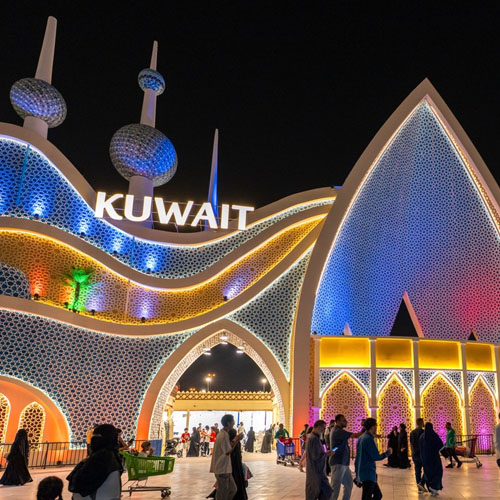
Designed as a contemporary interpretation of Kuwait’s historic Al-Mubarakiya souq with geometric Islamic patterns and wind towers (barjeel) adapted for modern aesthetics, the pavilion celebrates Kuwait’s mercantile heritage and post-liberation cultural renaissance.
What You’ll Find:
Textiles: Heavy silk bishts with intricate gold telli embroidery unique to Kuwaiti ceremonial wear, shemagh (headscarves) in distinctive Kuwaiti red-and-white check patterns, and sadu weaving featuring camel and palm motifs specific to Kuwaiti Bedouin tribes.
Perfumery: Oud oil distilled from agarwood aged 20+ years, mukhallat (attar) blends featuring saffron and amber, and traditional bukhoor (incense) burners crafted from brass with Kuwaiti geometric engraving.
Handicrafts: Sadu weaving demonstrations by master artisans from Kuwait’s Al-Sadu House cultural institution, mother-of-pearl inlaid furniture reflecting Kuwait’s pearling history, and miniature dhow models built using traditional shipbuilding techniques.
Spices: Baharat Kuwaiti featuring distinctive black lime and dried lime powder, saffron from Iranian imports historically traded through Kuwaiti merchants, and hawaij spice blends for Yemeni-Kuwaiti fusion cuisine.
Food: Machboos dajaj (chicken machboos with Kuwaiti spice profile), gabout (stuffed dates with nuts and spices), balaleet (sweet vermicelli with cardamom), and khubz (flatbread) baked in traditional taboon ovens hourly.
Shopping Tips: Authentic Kuwaiti sadu features asymmetrical patterns—symmetrical designs indicate machine production. Oud oil prices reflect aging duration; genuine 20-year aged oil costs minimum AED 800 per tola (12ml). Bargaining expected on textiles (start at 65% of asking price) but not on certified perfumes.
Cultural Performances: Fijiri sea music with Kuwaiti lyrical variations celebrating pearl diving heritage, contemporary Kuwaiti folk dances blending Bedouin and coastal traditions, and poetry recitals featuring Nabati verse forms unique to Gulf oral tradition.
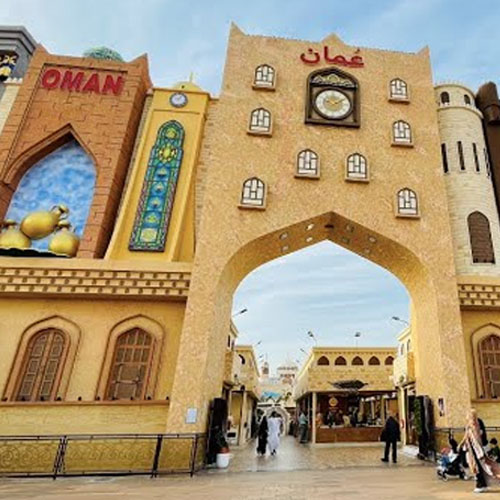
Inspired by Nizwa Fort’s imposing circular architecture and Sur’s dhow-building yards, the Oman Pavilion showcases the Sultanate’s maritime heritage and mountainous interior cultures. Date palm frond roofing (barasti) provides authentic shading while wind towers channel Gulf breezes through the space.
What You’ll Find:
Frankincense: Grade I Hojari frankincense resin harvested from Dhofar’s UNESCO-listed frankincense trees, smoked in traditional mabkhara (incense burners) allowing visitors to experience the scent that built Oman’s ancient trade empire. Artisans demonstrate resin grading by color and translucency.
Silverwork: Khanjar (Omani dagger) replicas with hand-chased silver sheaths featuring geometric patterns specific to tribal affiliations, halq (necklaces) with distinctive Omani filigree, and Bedouin jewelry using techniques unchanged since pre-Islamic times.
Textiles: Mussar (Omani turban fabric) in distinctive colors denoting regional origin—white for coastal areas, brown for mountain regions—and handwoven izaar (wraparound skirts) featuring natural dye patterns from Dhofar’s flora.
Dhow Models: Exquisitely detailed miniature dhows built using traditional shipbuilding techniques without nails—planks sewn with coconut fiber rope (markab) as practiced in Sur for centuries.
Food: Shuwa (slow-cooked lamb marinated in Omani spice blend), majboos with distinctive Omani lime (loomi) infusion, halwa cooked for hours in copper pots with rosewater and saffron, and kahwa (Omani coffee) flavored with cardamom and saffron.
Shopping Tips: Authentic frankincense tears should be translucent with citrus-pine aroma—cloudy pieces indicate inferior quality. Omani silver features hand-chased irregularities; machine-engraved pieces lack depth. Bargaining acceptable on textiles (start at 70% of asking price) but fixed pricing on certified frankincense grades.
Cultural Performances: Razha sword dances with distinctive Omani footwork patterns, Fann at-Tanbura spirit possession music featuring lyre-like tanbura instruments reflecting East African trade connections, and frankincense harvesting demonstrations with historical context about the Incense Route.
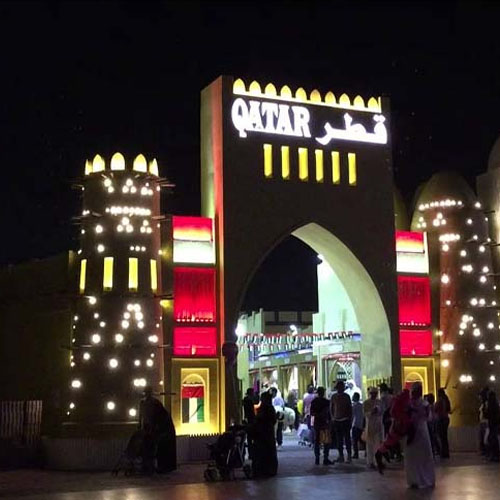
Architecturally referencing Doha’s Museum of Islamic Art with geometric patterns inspired by traditional jali screens and pearl-diving heritage motifs, the pavilion balances Qatar’s Bedouin roots with contemporary cultural renaissance under the Qatar National Vision 2030.
What You’ll Find:
Pearling Heritage: Authentic Gulf pearls with certification from Qatar’s historic pearling industry, mother-of-pearl inlaid boxes featuring geometric patterns specific to Qatari sadu weaving traditions, and displays of traditional pearl-diving equipment (hasah diving weights, fataam nose clips).
Textiles: Bisht cloaks with distinctive Qatari embroidery using gold thread in patterns denoting tribal affiliation, shemagh in Qatar’s unique maroon-and-white color scheme (national color derived from historic purple dye production), and handwoven palm-frond products.
Perfumery: Oud oils distilled from agarwood aged in Qatari tradition, mukhallat blends featuring saffron and amber with Qatari formulation techniques, and traditional bukhoor featuring Omani frankincense and Qatari floral essences.
Handicrafts: Sadu weaving demonstrations showing geometric patterns specific to Qatari Bedouin tribes (distinct from Kuwaiti or Saudi variations), gypsum carving (nakheel) featuring Islamic geometric patterns, and miniature dhow models built using traditional Qatari shipbuilding techniques.
Food: Machboos with Qatari spice profile featuring distinctive black lime (loomi), thareed (bread stew with meat and vegetables), balaleet (sweet vermicelli with cardamom), and luqaimat (date syrup dumplings) prepared fresh hourly.
Shopping Tips: Qatari sadu features specific color combinations denoting tribal origin—authentic pieces include maker’s tribal signature in pattern. Pearl certification essential; uncertified “Qatari pearls” often originate from cultured pearl farms. Bargaining acceptable on textiles (start at 70% of asking price) but fixed pricing on certified pearls and perfumes.
Cultural Performances: Ardah performances with Qatari rhythmic variations featuring distinctive drum patterns, Fijiri sea music with Qatari lyrical themes celebrating pearl diving heritage, and contemporary Qatari folk dances blending Bedouin and coastal traditions.
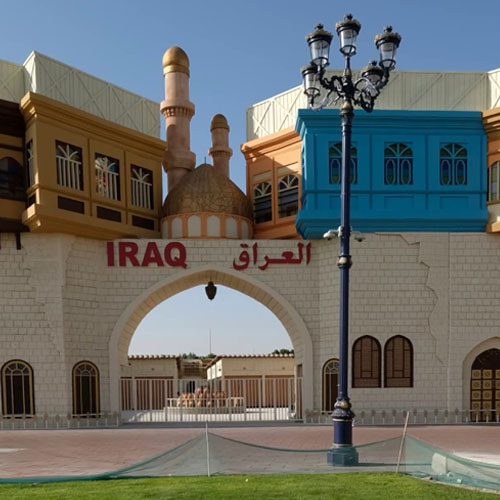
Marking its celebrated return after multi-year absence, the Iraq Pavilion recreates Babylonian architectural grandeur with ziggurat-inspired structures, Ishtar Gate blue-glazed brick motifs, and Mosul marble detailing. The pavilion serves as cultural reclamation—showcasing Iraq’s 7,000-year civilization beyond contemporary conflicts.
What You’ll Find:
Marble Craftsmanship: Mosul marble inlaid tables and boxes featuring geometric patterns using techniques nearly lost during recent conflicts. Master artisans from Mosul’s historic workshops demonstrate restoration of ancient marquetry methods.
Mesopotamian Heritage: Cuneiform tablet replicas with translations explaining Sumerian innovations (first writing system, wheel, legal codes), Babylonian star charts reflecting Iraq’s astronomical heritage, and miniature ziggurat models.
Textiles: Aba (woolen cloaks) handwoven in Mosul using techniques unchanged since Ottoman times, kufiyya with distinctive Iraqi check patterns, and silk fabrics from historic Mosul looms.
Spices & Dates: Date ma’amoul (date-filled cookies), baharat Iraqi featuring distinctive dried lime and turmeric blends, premium Brahim dates from Iraq’s Tigris-Euphrates date groves, and quzi spice blends for slow-cooked lamb dishes.
Handicrafts: Gatch gypsum carving featuring Islamic geometric patterns specific to Iraqi architectural tradition, copperware engraved with Mesopotamian motifs, and miniature dhow models reflecting Iraq’s historic Shatt al-Arab waterway trade.
Food: Masgouf (Tigris River carp grilled vertically over date palm embers—Iraq’s national dish), quzi (slow-cooked lamb with rice and nuts), kubba (bulgur wheat shells stuffed with meat), and kleicha (date-filled cookies) prepared using family recipes from Baghdad, Mosul, and Basra.
Shopping Tips: Authentic Mosul marble features subtle color variations—uniform pieces indicate synthetic materials. Iraqi spices should emit potent aromas; faded scents indicate age degradation. Bargaining expected (start at 60% of asking price) as Iraqi vendors appreciate engaged negotiation as cultural respect.
Cultural Performances: Maqam vocal performances featuring Iraq’s unique microtonal scales recognized by UNESCO as Intangible Cultural Heritage, chobi folk dances with Assyrian and Kurdish regional variations, and storytelling sessions recounting One Thousand and One Nights tales originating in Baghdad’s Abbasid era.
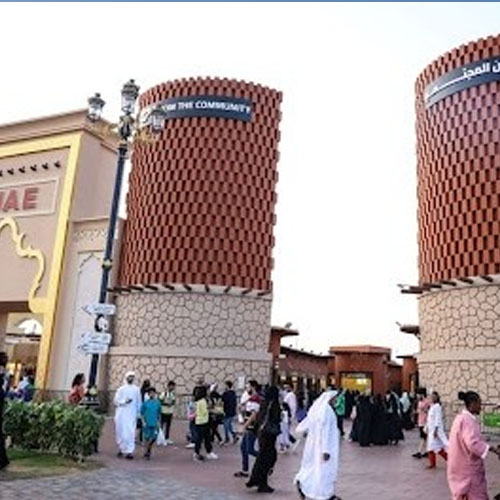
Named after UAE’s country code (+971), this innovative pavilion showcases grassroots creativity from Dubai’s 200+ nationalities living harmoniously within the Emirates. Architecturally fluid with modular design reflecting Dubai’s ever-evolving urban landscape, the space transforms weekly to highlight different community groups—Filipino cultural associations one week, Indian diaspora artists the next.
What You’ll Find:
Rotating Artisan Collective: Weekly featured communities demonstrate crafts—from Sri Lankan kolam rice flour art to Nigerian adire textile dyeing—creating dynamic cultural exchange impossible in static national pavilions.
Fusion Cuisine: Experimental food stalls where expatriate chefs create UAE-inspired fusion dishes—Emirati-spiced Filipino adobo, Indian-Chinese chili chicken with Gulf saffron, Lebanese manakish with Emirati date syrup.
Community Storytelling: Digital kiosks featuring video narratives from long-term UAE residents sharing migration stories, cultural adaptation experiences, and what “home” means in Dubai’s multicultural context.
Social Enterprise Products: Goods from UAE-based social enterprises—refugee women’s cooperatives producing Syrian soap in Sharjah, autistic artists’ ceramics from Dubai-based studios, sustainable fashion from Emirati youth designers.
Language Exchange Corner: Scheduled sessions where visitors practice Arabic phrases with native speakers or learn basic greetings in Tagalog, Malayalam, or Bengali from Dubai’s diverse residents.
Shopping Tips: Products rotate weekly—follow Global Village’s Instagram for “Community Spotlight” announcements. Social enterprise items carry premium pricing reflecting ethical production; bargaining considered inappropriate. Limited-edition artisan pieces sell out quickly—visit early during featured community weeks.
Cultural Performances: Unrehearsed cultural exchanges—Brazilian capoeira practitioners inviting Emirati youth to join, Filipino tinikling bamboo dancers teaching basic steps to visitors, spontaneous Bollywood flash mobs organized by Dubai’s Indian community. Schedule posted weekly at pavilion entrance.
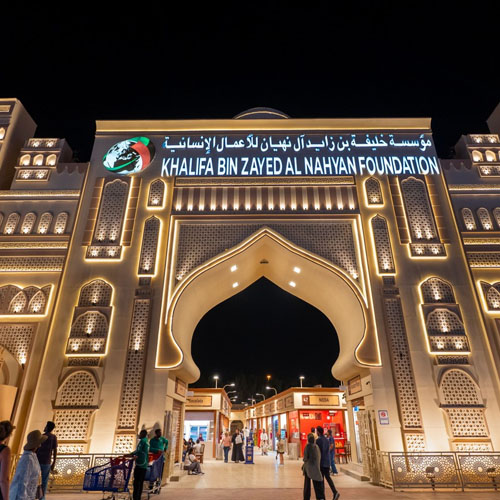
Dedicated to UAE humanitarian legacy under Sheikh Khalifa bin Zayed Al Nahyan’s vision, this pavilion transcends commerce to showcase cultural preservation initiatives funded across 40+ countries. Architecturally minimalist with sustainable materials—recycled palm fronds, reclaimed desert stone—emphasizing ethical values over ornamental display.
What You’ll Find:
Heritage Preservation Projects: Interactive maps showing Foundation-funded restoration of Timbuktu manuscripts, Afghan carpet-weaving cooperatives for refugee women, and Mesopotamian archaeological site protections in Iraq.
Artisan Empowerment: Products exclusively from Foundation-supported cooperatives—Afghan khamak embroidery by women’s collectives, Syrian soap from Aleppo artisans relocated to Jordan camps, Yemeni silverwork sustaining displaced craftspeople.
Documentary Screenings: Hourly screenings of Foundation-produced films documenting cultural rescue missions—rescuing Timbuktu’s manuscripts during conflict, preserving Mosul’s marble craftsmanship post-liberation.
Ethical Certification: Each product carries QR code linking to artisan profile, community impact metrics, and Foundation verification of fair wages and working conditions—radical transparency in cultural commerce.
Children’s Cultural Education: Interactive stations where children learn Arabic calligraphy basics, assemble miniature majlis seating arrangements understanding Emirati hospitality principles, or match global musical instruments to their origins.
Shopping Tips: All items fixed pricing reflecting true production costs plus Foundation administrative fees—bargaining inappropriate and counter to ethical mission. Products often limited edition; purchase decisions directly impact artisan livelihoods. Receipts include impact statement showing portion funding future preservation projects.
Cultural Performances: Artisans from Foundation projects demonstrate endangered crafts—Afghan carpet knotting techniques, Syrian mosaic assembly using ancient Roman methods—with context about how Foundation support prevents cultural extinction. Performances emphasize education over entertainment.
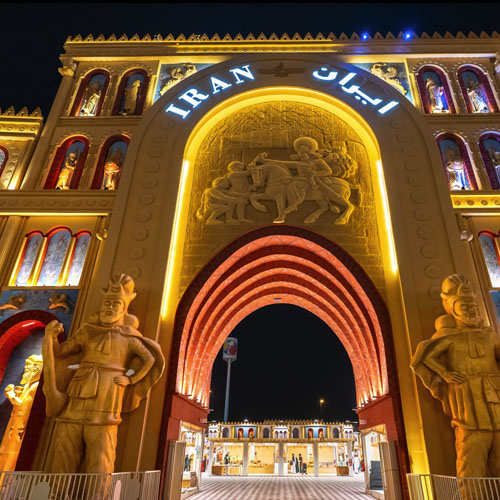
Architecturally evoking Isfahan’s Naqsh-e Jahan Square with turquoise-tiled domes, intricate muqarnas vaulting, and Persian garden (bagh) water channels, the Iran Pavilion showcases 2,500 years of uninterrupted Persian civilization. The space balances pre-Islamic Zoroastrian heritage with Islamic Golden Age achievements.
What You’ll Find:
Persian Carpets: Tabriz, Isfahan, and Kashan carpets with region-specific knot densities (Tabriz: 100+ knots/sq inch) and symbolic patterns—boteh (paisley) representing cypress trees, gol farang (European flower) reflecting Safavid trade with Europe. Master weavers demonstrate techniques taking months per square meter.
Miniature Painting: Exquisitely detailed manuscript illustrations using natural pigments (lapis lazuli for blue, saffron for yellow) on handmade paper. Artists demonstrate gol-o-morgh (flower-and-bird) motifs symbolizing paradise gardens.
Turquoise Jewelry: Nishapur turquoise set in silver with khatam-kari (Persian marquetry) patterns, featuring the stone’s distinctive robin’s-egg blue hue impossible to replicate synthetically.
Spices & Saffron: Grade I Iranian saffron threads (red stigma only—no yellow styles) with aroma intensity test stations, advieh spice blends for Persian rice dishes, dried limes (limoo amani) essential to ghormeh sabzi.
Handicrafts: Khatam-kari marquetry boxes using 300+ wood/metal/bone pieces per square inch, ghalamkar hand-block printed textiles with natural dyes, and termeh silk brocade woven with gold threads for ceremonial use.
Food: Chelow kabab (saffron rice with grilled lamb), fesenjan (pomegranate-walnut stew), tahdig (crispy rice crust) prepared in traditional tanoor ovens, baklava with rosewater and pistachios, and doogh (yogurt drink with mint).
Shopping Tips: Authentic Persian carpets feature hand-knotted irregularities—machine-made pieces show perfect uniformity. Saffron should emit intense floral aroma; weak scent indicates age degradation or adulteration. Bargaining expected (start at 60% of asking price) but approach respectfully—Persian vendors appreciate knowledgeable negotiation referencing carpet regions or saffron grades.
Cultural Performances: Classical Persian music on tar (long-necked lute) and daf (frame drum) featuring dastgah modal systems, bandari folk dances from Persian Gulf coastal regions with African rhythmic influences, and poetry recitals featuring Rumi and Hafez verses with English translations.
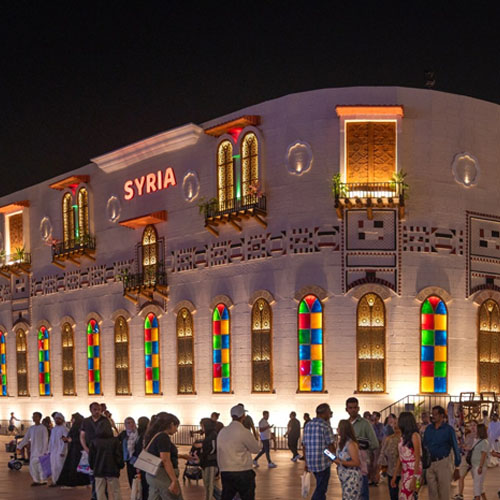
Architecturally inspired by Aleppo’s historic souqs with Ottoman-era stone arches, Damascus’ courtyard houses (beit), and intricate ajami (gilded relief) wall panels, the Syria Pavilion serves as living archive of cultural heritage threatened by recent conflicts. Every craft demonstrated represents preservation resistance.
What You’ll Find:
Aleppo Soap: Olive oil and laurel berry soap cubes produced using 800-year-old methods in historic Aleppo soap factories. Demonstrations show the 6-month curing process essential to quality, with soap stamped with maker’s family mark—a tradition since Mamluk times.
Marquetry: Khatam-kari geometric inlay work using wood, mother-of-pearl, and brass on boxes and furniture. Damascus artisans demonstrate techniques requiring 300+ precisely cut pieces per square inch—patterns passed through families for generations.
Textiles: Aghabani brocade weaving featuring metallic threads on silk, mukhmal velvet with raised patterns specific to Syrian regions, and shash headscarves with Damascus floral motifs distinct from other Levantine styles.
Glassblowing: Hebron glass techniques adapted in Damascus—colored glass vessels created using methods unchanged since Roman times. Artisans demonstrate blowing techniques while explaining how workshops survived urban warfare through underground production.
Spices: Baharat shami (Syrian spice blend) featuring allspice and cinnamon distinct from Gulf baharat, za’atar with thyme varieties specific to Syrian highlands, and dibs (grape molasses) used in fattoush salad.
Food: Kibbeh (bulgur wheat shells stuffed with spiced meat—over 30 Syrian regional variations), yabra (stuffed vine leaves with Syrian spice profile), maqluba with distinctive Syrian eggplant preparation, and baklava with pistachios from Aleppo’s historic groves.
Shopping Tips: Authentic Aleppo soap should feel dense with subtle laurel scent—lightweight pieces indicate inferior oils. Syrian marquetry features hand-cut irregularities; machine-cut pieces lack depth. Bargaining considered disrespectful—pay asking price to support cultural preservation amid displacement. Each purchase includes artisan story card documenting workshop location and heritage significance.
Cultural Performances: Dabke line dances with Syrian regional variations (Aleppo’s energetic style versus Damascus’ measured steps), oud performances featuring Syrian maqam scales distinct from Iraqi or Egyptian traditions, and storytelling sessions recounting Aleppo’s souq histories through oral narrative.
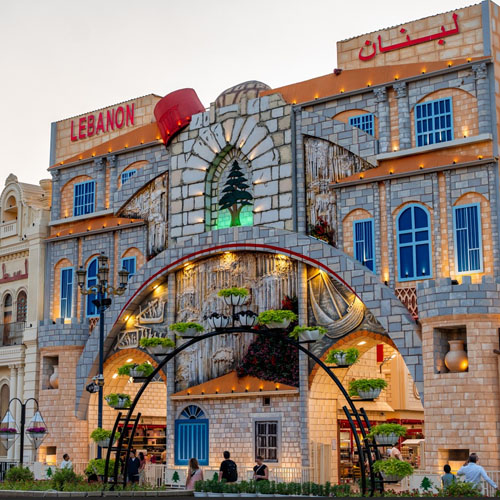
Architecturally evoking Beirut’s historic souqs with French Mandate-era arches blended with traditional Lebanese stone masonry, the pavilion celebrates Lebanon’s Phoenician mercantile heritage and Mediterranean cultural fusion. Cedar wood accents reference the national symbol featured on Lebanon’s flag.
What You’ll Find:
Cedar Wood Crafts: Hand-carved cedar boxes featuring Phoenician motifs, religious icons, and kitchen utensils. Artisans demonstrate carving techniques using wood from Lebanon’s protected cedar reserves—each piece certified sustainable.
Textiles: Aghabani brocade with metallic threads specific to Lebanese weaving traditions, moucharabieh (lattice) patterned fabrics reflecting Beirut’s architectural heritage, and silk scarves from historic Zahlé looms.
Perfumery: Rosewater distilled from Lebanon’s Damask roses (cultivated since Roman times), ma ward (rose syrup) for beverages, and traditional attar blends featuring orange blossom and jasmine from Lebanese coastal groves.
Handicrafts: Mosaic tables using Byzantine-era techniques with Lebanese stone varieties, blown glass from Tripoli workshops using methods unchanged since Phoenician times, and nargileh (hookah) pipes with Lebanese brass craftsmanship.
Spices: Za’atar blends featuring thyme varieties specific to Lebanese mountains, sumac ground from berries harvested in Bekaa Valley, and baharat libnani with distinctive allspice emphasis.
Food: Tabbouleh with parsley-to-bulgur ratio adhering to Lebanese authenticity standards (4:1 minimum), kibbeh nayyeh (raw meat preparation with Lebanese spice profile), manakish (flatbread with za’atar or cheese), knafeh with Akkawi cheese from Tripoli, and arak (anise spirit) tastings for adults.
Shopping Tips: Authentic Lebanese cedar emits distinctive aromatic scent when warmed—odorless wood indicates inferior species. Za’atar should feature vibrant green color; brownish hues indicate age degradation. Bargaining acceptable on textiles (start at 70% of asking price) but fixed pricing on certified cedar products and spices.
Cultural Performances: Dabke line dances with Lebanese coastal versus mountain regional variations, tarab vocal performances featuring Lebanese maqam scales with French musical influences reflecting Mandate-era fusion, and contemporary Lebanese folk fusion blending traditional instruments with jazz elements.
Turkey maintains one of the most popular pavilions, famous for its Turkish ice cream vendors' entertaining performances and authentic Turkish delight. Other European representations include pavilions featuring Russian goods, Italian leather products, and various Eastern European crafts.
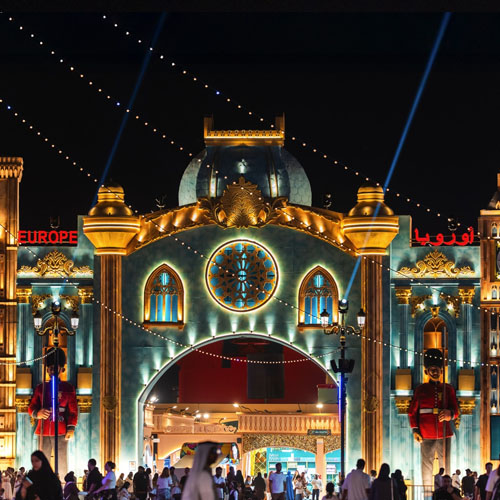
Spanning 15+ European nations within a unified architectural space inspired by Venice’s Grand Canal bridges meeting Barcelona’s modernisme curves, the Europe Pavilion curates continent’s diversity through rotating weekly spotlights—Italian Renaissance week, Scandinavian design week, Balkan folk week—preventing cultural flattening.
What You’ll Find:
Rotating National Spotlights: Weekly featured countries transform sections—French perfume workshops one week, German cuckoo clock demonstrations the next, Portuguese azulejo tile painting the following. Schedule posted at entrance and on Global Village app.
Textiles: Italian silk scarves from Como region, Scottish tartan woolens with clan-specific patterns, Irish Aran knitwear with stitch patterns denoting family origins, Spanish mantilla lace with regional variations.
Porcelain & Glass: Czech crystal with hand-cut precision requiring 30+ polishing stages, German Meissen porcelain with cobalt blue onion patterns unchanged since 1720, Venetian Murano glass with murrine mosaic techniques.
Gastronomy: French macarons with proper pied (foot) formation, Belgian chocolates with praline fillings using methods unchanged since 19th century, Spanish jamón ibérico sliced to translucent thinness, Greek olive oils with protected designation of origin (PDO) certification.
Handicrafts: Swiss music boxes with hand-tuned cylinders, Dutch Delftware blue-and-white pottery with hand-painted motifs, Polish wycinanki paper cutouts featuring regional folk patterns, Hungarian Herend porcelain with fishnet patterns.
Shopping Tips: European luxury goods carry fixed pricing—bargaining inappropriate and culturally offensive. Authenticity markers essential: Italian silk should carry “100% Silk” label with mill stamp, Swiss watches require “Swiss Made” certification on case back. Weekly spotlights create urgency—featured country items often sell out by weekend.
Cultural Performances: Rotating weekly showcases—Irish step dancing with hard-shoe rhythms, Flamenco with regional palos (styles) from Andalusia, Viennese waltz demonstrations, Balkan brass band performances with Serbian truba trumpet traditions. Schedule coordinated with national spotlight rotations.
Architecturally evoking Istanbul’s Grand Bazaar with Ottoman-era domes, Iznik tilework in cobalt blue and coral red, and Seljuk-era geometric patterns, the Turkey Pavilion showcases 1,000 years of uninterrupted craftsmanship where Byzantine, Persian, and Central Asian traditions fused into distinct Turkish aesthetics.
What You’ll Find:
Carpets: Hereke silk carpets with 100+ knots per square inch requiring years per piece, Oushak carpets with large-scale geometric patterns favored by European royalty since Renaissance, and tribal kilims with symbolic patterns denoting village origins.
Ceramics: Iznik pottery with coral red underglaze (technique lost for centuries, recently revived), Çini tiles with floral patterns specific to Ottoman palace workshops, and Ephesus-inspired ceramic replicas using ancient Greek techniques.
Textiles: Ottoman-style caftans with gold-thread embroidery requiring 200+ hours per garment, peshtemal (hammam towels) with hand-loomed stripes, and oya needle-lace edging with floral motifs carrying symbolic meaning (roses for love, carnations for pride).
Spices: Pul biber (Aleppo pepper) with distinctive moderate heat and fruity notes, * isot* (Urfa pepper) with smoky-sweet profile, tarçın (cinnamon) essential to Turkish coffee, and menengiç (terebinth) coffee substitute from southeastern Turkey.
Handicrafts: Ebru marbling art with pigments floated on water then transferred to paper, calligraphy with reed pens (kalem) cut at precise angles for Ottoman scripts, copperware hammered by masters using techniques unchanged since Seljuk era.
Food: Kebabs with regional variations (Adana’s spicy minced meat, Urfa’s milder version), lahmacun (“Turkish pizza” with proper thin crust), baklava with 40+ phyllo layers and Antep pistachios, Turkish delight (lokum) with rosewater/pistachio fillings, çay (tea) served in tulip-shaped glasses.
Shopping Tips: Authentic Turkish carpets feature hand-knotted irregularities—machine-made pieces show perfect uniformity. Iznik pottery should display cobalt blue with subtle variations; uniform color indicates modern production. Bargaining expected (start at 60% of asking price) but maintain respectful demeanor—Turkish vendors appreciate knowledge about regional carpet styles.
Cultural Performances: Whirling Dervishes (Sema ceremony) with spiritual context about Mevlevi Sufi tradition, Karagöz shadow puppet theater with Ottoman-era satirical stories, Zeybek folk dances with Aegean regional variations, and ney (reed flute) performances with microtonal makam scales.
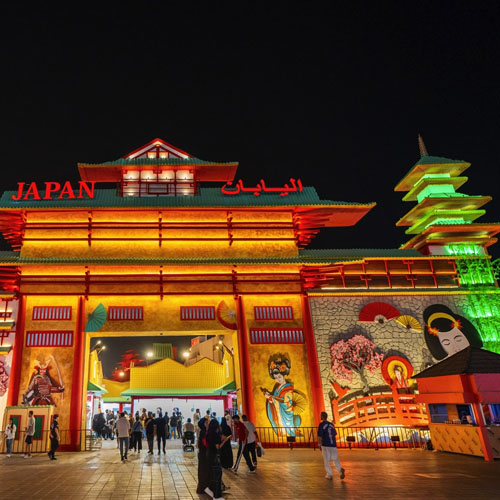
Architecturally evoking Kyoto’s machiya townhouses with shoji paper screens, tatami mat flooring, and minimalist wabi-sabi aesthetics celebrating imperfection, the Japan Pavilion balances ancient traditions (tea ceremony, calligraphy) with contemporary pop culture (anime, street fashion) reflecting Japan’s dual temporal identity.
What You’ll Find:
Textiles: Kimono silks with region-specific dyeing techniques—Kyoto yuzen hand-painting, Okinawa bingata stencil dyeing, Tokyo Edo komon minute patterns requiring magnifying glasses to appreciate. Artisans demonstrate shibori tie-dye with 100+ folding techniques.
Crafts: Origami with washi paper made from mulberry bark using methods unchanged since Heian period, kintsugi pottery repair using lacquer and gold powder celebrating breakage history, temari embroidered thread balls with geometric patterns requiring mathematical precision.
Stationery: Washi paper products with fibers visible to naked eye (machine-made paper lacks texture), fude calligraphy brushes with animal hair blends specific to stroke styles, sumi ink sticks ground on suzuri stones releasing pine scent.
Food: Ramen with region-specific broths (Hakata tonkotsu, Sapporo miso), takoyaki (octopus balls) with proper crisp exterior/soft interior, matcha tea ceremony demonstrations with usucha (thin tea) preparation, mochi pounding demonstrations during festival periods, sake tastings with seasonal varieties.
Pop Culture: Limited-edition anime merchandise unavailable outside Japan, kawaii character goods with Dubai-exclusive collaborations, Gachapon capsule toy machines with region-specific releases.
Shopping Tips: Authentic washi paper feels fibrous with visible plant fibers—smooth texture indicates wood pulp paper. Kimono silk should display subtle texture variations; uniform sheen indicates polyester blend. Fixed pricing prevails—bargaining culturally inappropriate in Japanese commercial contexts.
Cultural Performances: Tea ceremony (sadō) with choreographed movements reflecting Zen principles, taiko drumming with ensemble rhythms requiring precise synchronization, ikebana flower arrangement demonstrations with seasonal symbolism, cosplay performances blending traditional and contemporary Japanese aesthetics during weekend evenings.
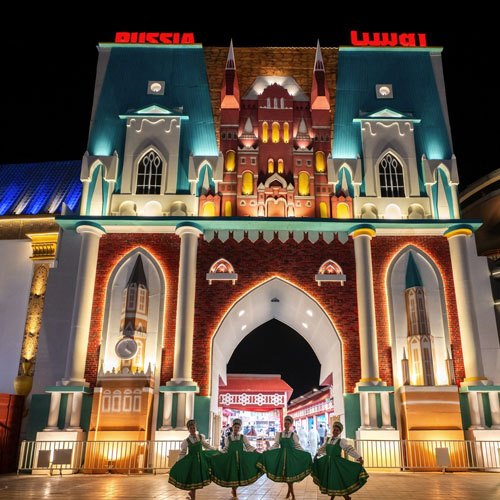
Architecturally inspired by St. Basil’s Cathedral with colorful onion domes adapted for Dubai’s climate using sustainable materials, the Russia Pavilion showcases Eurasian cultural breadth—from European folk traditions to Siberian indigenous crafts—within a single immersive space.
What You’ll Find:
Matryoshka Dolls: Hand-painted nesting dolls featuring regional styles—Sergiev Posad’s floral patterns, Semionov’s bright palettes, Polkhovskaya Maidan’s distinctive red backgrounds. Master painters demonstrate techniques requiring 15+ layers of lacquer.
Textiles: Khokhloma painted wooden tableware with gold-on-red patterns using techniques unchanged since 17th century, pavloposadski shawls with intricate floral prints requiring 30+ color applications, and valenki (felt boots) hand-felted using sheep wool.
Amber Jewelry: Baltic amber polished and set in silver with inclusions (trapped insects/plants) increasing value. Artisans explain geological formation spanning 40 million years and historical trade along the Amber Road.
Handicrafts: Gzhel ceramics with distinctive blue-on-white patterns specific to Moscow region village, palekh miniature lacquer boxes featuring scenes from Russian folklore painted with squirrel-hair brushes, and birch bark baskets woven using Siberian indigenous techniques.
Food: Blini (buckwheat pancakes) with caviar or sour cream prepared hourly, pelmeni (Siberian dumplings) with beef/pork fillings, beef stroganoff with proper Russian sour cream base, medovik (honey cake) with 8+ layers, and kvass (fermented bread drink).
Shopping Tips: Authentic matryoshka feature hand-painted irregularities—machine-printed pieces show perfect uniformity. Amber should feel warm to touch (plastic imitations feel cold); request UV light test to verify authenticity. Fixed pricing prevails—bargaining considered inappropriate in Russian commercial culture.
Cultural Performances: Ballet excerpts performed by Dubai-based Russian dancers, Cossack folk dances with acrobatic squat kicks (prisiadki), balalaika and accordion ensembles playing folk songs from specific Russian regions, and Maslenitsa (Butter Week) celebrations with pancake-making demonstrations during February visits.
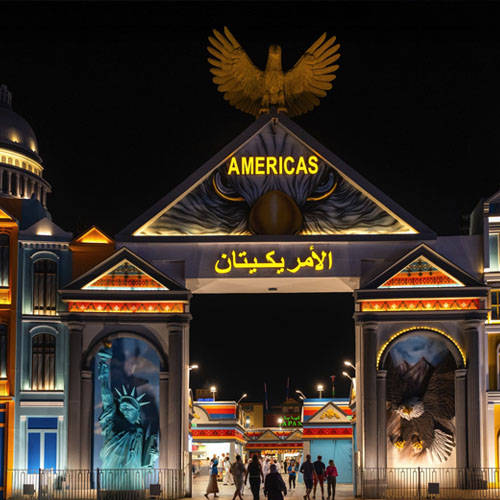
Spanning North, Central, and South America within architectural space blending adobe Pueblo structures, Caribbean colonial arches, and Amazonian thatched roofs, the Americas Pavilion avoids homogenization through rotating regional spotlights—Andean week, Mesoamerican week, Caribbean week—celebrating hemisphere’s Indigenous, African, and European fusion cultures.
What You’ll Find:
Rotating Regional Spotlights: Weekly featured regions transform sections—Peruvian chakana (Andean cross) symbolism week, Mexican alebrije wood carving week, Brazilian capoeira culture week. Schedule posted at entrance and on Global Village app.
Textiles: Guatemalan huipiles with village-specific patterns (each village’s design protected as cultural intellectual property), Peruvian aguayos (carrying cloths) with Andean cosmological symbols, Mexican rebozos with ikat dyeing techniques.
Handicrafts: Oaxacan alebrije fantastical wood carvings with 15+ paint layers, Colombian mochila bags with Wayuu Indigenous patterns carrying cultural meaning, Haitian metal drum art transformed from oil barrels into intricate sculptures.
Spices & Ingredients: Mexican mole blends with 20+ ingredients including chocolate and chilies, Peruvian aji peppers essential to ceviche, Brazilian dendê (palm oil) for Bahian cuisine, Canadian maple products with protected origin certification.
Food: Mexican tacos al pastor with proper trompo (vertical spit) preparation, Peruvian ceviche with leche de tigre marinade, Brazilian feijoada (black bean stew) with proper accompaniments, Argentine empanadas with regional fillings, Jamaican jerk chicken with pimento wood smoke flavor.
Shopping Tips: Authentic Indigenous textiles feature hand-woven irregularities—machine-made pieces show perfect uniformity. Oaxacan alebrijes should feel lightweight with intricate carving; heavy pieces indicate inferior wood. Bargaining practices vary by culture—acceptable for Mexican crafts (start at 60%), inappropriate for Indigenous cooperative items (fixed pricing supports communities).
Cultural Performances: Rotating weekly showcases—Mexican baile folklórico with regional costumes, Brazilian capoeira with berimbau music, Andean panpipe ensembles with sikus (panpipes) played in interlocking patterns, Caribbean steel drum bands with calypso rhythms. Schedule coordinated with regional spotlight rotations.
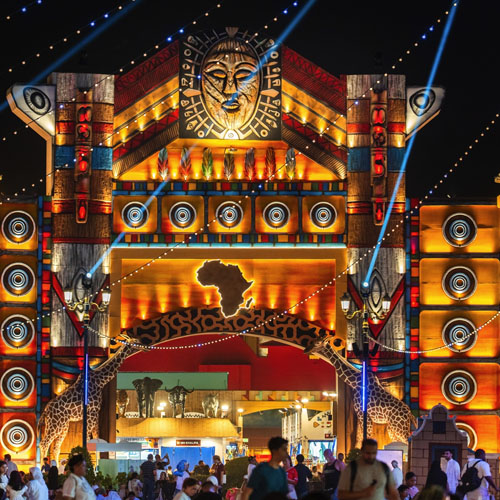
Spanning 15+ African nations within architectural space blending Moroccan zellige, West African mud architecture, East African Swahili coral stone, and Southern African thatched roofs, the Africa Pavilion avoids pan-African homogenization through curated regional zones—North African aromatics zone, West African textile zone, East African coffee zone, Southern African beadwork zone.
What You’ll Find:
Textiles: Nigerian adire indigo-dyed cloth with resist techniques (stitched adire eleko versus cassava paste adire oniko), Ghanaian kente cloth with symbolic patterns denoting Ashanti royalty status, Ethiopian shemma cotton with hand-spun threads, Maasai shukas (checked cloths) with beadwork specific to age-set.
Beadwork: Maasai bead collars with color symbolism (red for bravery, blue for energy), Zulu love letters (izincwadi) with patterned bead messages, Tuareg silver jewelry with protective tcherot crosses.
Spices & Coffee: Ethiopian Yirgacheffe coffee with proper jebena clay pot brewing ceremony, Moroccan ras el hanout with 20+ spices, West African grains of paradise (African pepper), South African rooibos tea with protected geographical indication.
Handicrafts: Zimbabwean shona stone sculptures with serpentine stone carving techniques, Kenyan kiondo sisal baskets with coiled techniques, Malian bogolanfini mud cloth with fermented mud dyeing processes, Egyptian papyrus using Nile reeds.
Food: Ethiopian injera (sourdough flatbread) with wat stews served on communal platter, Moroccan tagine with preserved lemons/olives, South African bobotie (curried minced meat bake), Nigerian jollof rice with proper smoky flavor, Kenyan nyama choma (grilled meat) with kachumbari salsa.
Shopping Tips: Authentic kente features hand-woven irregularities—machine-made pieces show perfect uniformity. Ethiopian coffee beans should emit floral aroma; flat scent indicates age degradation. Bargaining practices vary by culture—expected for West African textiles (start at 50%), inappropriate for cooperative items (fixed pricing supports communities).
Cultural Performances: Rotating regional showcases—West African djembe drum circles with call-and-response patterns, East African taarab music with Swahili poetry and Arabic instrumentation, Southern African gumboot dancing with mining history context, North African Gnawa trance music with spiritual significance. Schedule posted daily at pavilion entrance.
The carnival section transforms Global Village into an amusement park, offering rides and attractions suitable for all courage levels.
The Euro Coaster: A traveling roller coaster featuring inversions, high speeds, and significant height. For adrenaline enthusiasts, this ride delivers genuine thrills comparable to permanent theme park installations. Minimum height requirements apply (typically 140cm+).
Sky Drop Tower: Ascend slowly to enjoy panoramic Global Village views before experiencing the stomach-dropping free fall. The brief moment at the top offers a unique perspective of the entire venue before the exhilarating descent.
Extreme: A pendulum ride swinging passengers to extreme heights and angles, providing intense G-forces and an adrenaline rush. Riders must secure loose items before boarding.
Tornado: Spinning and rotating simultaneously, this ride creates a disorienting but thrilling experience for those who enjoy spinning attractions.
Ferris Wheel: Multiple Ferris wheels of varying sizes offer gentle entertainment with elevated views. The largest provides excellent photography opportunities, especially during the "golden hour" or after dark when the park's lights create a magical panorama.
Flying Elephants/Carousel: Classic rides suitable for younger children, featuring gentle circular motion and themed vehicles. These nostalgic rides create memorable experiences for families with small children.
Bumper Cars: Multiple bumper car arenas allow friendly competition. Different arenas may have varying themes or vehicle designs, and some are designated for younger children with gentler collisions.
Train Rides: Miniature train circuits, often themed, provide relaxing tours through decorated sections. These offer respite for tired feet while entertaining children.
Tea Cups: Spinning tea cups allowing rider-controlled rotation speed—as gentle or wild as passengers desire.
Age-Appropriate Rides: Smaller-scale versions of popular rides designed specifically for children under 110cm, including mini drop towers, gentle swings, small slides, and themed vehicles.
Play Areas: Soft play structures, climbing frames, and interactive zones where young children can burn energy safely.
Character Meet-and-Greets: Costumed characters roam the kids' zone, posing for photos and interacting with young visitors.
Individual Ride Tickets:
Strategy: If planning to experience multiple thrill rides, packages offer value. For families with young children focusing on gentler rides, individual tickets or small packages may suffice.
Global Village's entertainment rivals dedicated performing arts venues, with productions created specifically for the venue or touring internationally acclaimed acts.
Theater Specifications: The main theater accommodates thousands of spectators with tiered seating providing clear sightlines. State-of-the-art sound and lighting systems support professional-quality productions.
International Acrobatic Shows: Featuring performers from circus traditions worldwide—Chinese acrobats demonstrating incredible flexibility and balance, Russian bar performers executing dangerous aerial moves, contortionists defying human anatomy limitations, and trapeze artists performing death-defying aerial choreography.
Musical Extravaganzas: Full production shows combining music, dance, and theatrical elements. These may include Broadway-style performances, cultural music spectaculars, or contemporary music shows featuring popular genres.
Dance Spectaculars: Professional dance troupes presenting choreographed productions spanning styles from classical ballet to contemporary hip-hop, Latin dance to traditional cultural performances.
Magic and Illusion Shows: Internationally touring magicians and illusionists performing large-scale illusions, close-up magic, mentalism, and variety magic suitable for family audiences.
Comedy Performances: Family-friendly comedy acts, often featuring physical comedy, mime, and universal humor transcending language barriers.
Show Schedule: Typically 3-5 major productions daily, rotating throughout the season. Shows run 30-45 minutes with showtimes distributed across evening hours (approximately 6:00 PM, 7:30 PM, 9:00 PM, 10:30 PM). Arrive 15-20 minutes early for popular shows to secure good seating.
Stilt Walkers: Costumed performers on stilts, some reaching 10-12 feet in height, roam pathways interacting with visitors, posing for photos, and creating visual spectacle.
Living Statues: Performers maintaining statuesque poses in elaborate costumes and makeup, occasionally moving to surprise and delight onlookers.
Roaming Musicians: Solo artists or small ensembles performing various musical styles—from classical string quartets to contemporary bands, traditional Middle Eastern music to Latin rhythms.
Cultural Demonstration Groups: Small performance groups showcasing traditional arts—African drumming circles, Indian tabla performances, Middle Eastern dabke dance, Brazilian capoeira demonstrations.
Interactive Characters: Costumed characters representing various themes (not licensed characters) engaging with children, distributing balloons, or leading impromptu dance parties.
Fire Performers: During cooler months, fire dancers, fire breathers, and fire manipulation artists perform spectacular nighttime shows featuring flames, sparks, and dangerous-looking stunts performed safely by professionals.
Individual pavilions schedule their own cultural demonstrations:
Whirling Dervishes (Turkey): Sufi spiritual practice transformed into mesmerizing performance art—white-robed dancers spinning continuously in meditative trance states, creating hypnotic visual experiences.
Belly Dancing (Various Middle Eastern Pavilions): Professional belly dancers performing traditional raqs sharqi with elaborate costumes, skilled movements, and often audience participation elements.
Bollywood Dance (India): High-energy choreographed performances to popular Bollywood music, featuring colorful costumes and energetic movements.
Martial Arts Demonstrations (China, Philippines): Kung fu, wushu, or arnis demonstrations showcasing traditional martial arts forms, weapons work, and board-breaking exhibitions.
Traditional Music Performances: Live performances of cultural music on traditional instruments—Chinese guzheng, Indian sitar, Arabic oud, African drums, creating authentic soundscapes.
UAE National Day (December 2):
International Days: Throughout the season, individual countries celebrate their national days with enhanced programming, special food offerings, cultural performances, and festive atmospheres at their respective pavilions.
Global Village's food scene deserves recognition as a destination within the destination. With over 200 food outlets representing dozens of cuisines, it's possible to travel the world through taste in a single evening.
Turkish Gözleme Station: Watch expert hands roll paper-thin dough, fill it with spinach and cheese, potatoes, or minced meat, then cook it on hot griddles (sac). The result—crispy, savory flatbread that's simple yet utterly satisfying. Price: AED 15-25.
Indian Chaat Corner: Experience India's beloved street food category. Pani puri (crispy shells filled with spiced water), bhel puri (puffed rice salad), papdi chaat (crispy crackers with yogurt and chutneys)—explosions of flavor combining sweet, savory, tangy, and spicy. Price: AED 10-20.
Arabic Shawarma Stands: Vertical rotisseries of marinated chicken or lamb, shaved thin and wrapped in warm pita with garlic sauce, pickles, and vegetables. Multiple vendors means quality comparison—seek out the ones with longest queues. Price: AED 12-18.
Filipino BBQ: Marinated meats grilled over charcoal—pork belly, chicken, fish—served with vinegar dipping sauce and rice. The smoky char and sweet-savory marinade create addictive flavors. Price: AED 20-35.
Chinese Dumpling Stations: Watch dumpling preparation in action—pleating, steaming, pan-frying. Xiaolongbao (soup dumplings), jiaozi (pan-fried dumplings), and various steamed buns. Dip in soy sauce, vinegar, and chili oil. Price: AED 15-25 for 6-8 pieces.
Egyptian Kushari: Egypt's national dish—a carbohydrate lover's dream combining rice, lentils, pasta, chickpeas, topped with crispy fried onions and spicy tomato sauce. Surprisingly harmonious and filling. Price: AED 15-20.
Mexican Tacos: Soft or hard shell tacos with various fillings—carne asada, carnitas, fish—topped with fresh salsa, cilantro, onions, and lime. Nachos, burritos, and quesadillas also available. Price: AED 20-30.
Thai Pad Thai: Stir-fried rice noodles with shrimp, chicken, or tofu, featuring the perfect balance of sweet, sour, salty, and spicy that defines Thai cuisine. Watch woks flame as chefs work at lightning speed. Price: AED 25-35.
Turkish Ice Cream Performance: Beyond just ice cream, this is entertainment. Vendors use long metal poles to stretch and manipulate the uniquely elastic dondurma, teasing customers in an elaborate dance before finally serving. The ice cream itself—flavored with mastic and salep—has a chewy, taffy-like texture unlike Western ice cream. Flavors: traditional, pistachio, chocolate, fruit varieties. Price: AED 15-20.
Arabic Sweets Emporium: Discover Middle Eastern confection artistry. Baklava (phyllo pastry with nuts and honey), kunafa (cheese pastry soaked in syrup), maamoul (date-filled cookies), halva, Turkish delight in countless flavors. Purchase by weight or pre-packaged boxes. Price: AED 20-50 per kilogram.
Indian Kulfi: Traditional Indian ice cream, denser and creamier than Western varieties. Classic flavors: pistachio, mango, rose, cardamom. Served in clay pots (kulhad) or on sticks. Price: AED 8-15.
Belgian Waffle Stations: Fresh-made waffles topped with Nutella, fresh fruits, whipped cream, ice cream, or maple syrup. The aroma alone draws crowds. Price: AED 20-30.
Churros Stands: Spanish-style fried dough pastries, crispy outside and soft inside, rolled in cinnamon sugar and served with chocolate sauce for dipping. Best consumed immediately while hot. Price: AED 15-20.
Fresh Juice Bars: Every few steps, juice vendors offer freshly squeezed or blended options. Popular choices: orange juice, pomegranate juice, sugar cane juice, mixed fruit blends, avocado shakes. Watch your drink prepared fresh. Price: AED 10-20.
Karak Chai Stalls: The beloved Arabian tea—strong black tea with milk, cardamom, and sugar, boiled together to create a comforting, spiced beverage. Perfect for cooler evenings. Price: AED 3-5.
Turkish Coffee: Thick, strong coffee prepared in traditional cezve (small pot), served in tiny cups. An acquired taste but culturally significant. Some vendors offer fortune telling from coffee grounds. Price: AED 10-15.
Bubble Tea Stations: Taiwanese-style tea-based drinks with tapioca pearls or fruit jellies. Countless flavor combinations and customizable sweetness levels. Price: AED 15-25.
Budgeting:
Food Safety: Food vendors operate under Dubai Municipality regulations with regular inspections. Look for busy stalls with high turnover—fresh food cycles quickly. Hot food should be steaming, cold items properly chilled.
Dietary Considerations:
Halal: Virtually all meat served is halal-certified, as required by UAE law.
Vegetarian: Abundant options across Indian, Egyptian, Mediterranean pavilions. Clearly ask about meat products in sauces or broths.
Vegan: Growing options, though less abundant. Indian vegetable dishes, falafel, hummus, fresh juices, and fruit desserts work well. Verify no ghee or dairy in preparations.
Gluten-Free: Challenging as many cuisines feature bread, noodles, and wheat. Rice-based dishes, grilled meats without marinade, fresh juices offer safer options. Communication with vendors is essential.
Allergies: Limited English and ingredient knowledge among some vendors creates challenges. Carry allergy cards in Arabic and English. Stick to simple preparations where ingredients are visible.
Eating Etiquette:
Many food stalls lack seating, so standing while eating is common. Designated seating areas exist throughout the park—arrive early to secure tables during peak dinner hours (7:30-9:30 PM). Dispose of waste in clearly marked bins; littering is both culturally frowned upon and carries fines.
Shopping at Global Village is an art form requiring knowledge, patience, and negotiation skills. Understanding the culture of bargaining transforms the experience from transactional to interactive.
Starting the Conversation: Browse without immediately appearing interested in specific items. Vendors often initiate conversation—respond politely but maintain that you're "just looking." This establishes non-pressure atmosphere.
Price Inquiry: When genuinely interested, ask "How much?" The quoted price is never the final price—it's the opening gambit in negotiation. A common initial quote might be 200-300% of the vendor's acceptable selling price.
The Counter-Offer: Respond with a counter-offer at 40-50% of their asking price. This isn't insulting—it's expected. The vendor may act shocked or claim your offer is impossibly low. Don't be deterred; this is theater.
The Dance: Negotiation proceeds in incremental steps. Each party moves slowly toward the middle. The vendor might say "This is quality merchandise," show certification, or point out features. You might examine the item more critically, point out imperfections, or mention you've seen similar items cheaper elsewhere.
Walking Away: If you cannot reach agreement, thank them and walk away. Often—not always, but often—vendors call you back with better offers. If they don't, you can return later with adjusted expectations or find similar items elsewhere.
Closing the Deal: Once you reach a price acceptable to both parties, the transaction completes quickly. Pay, receive your item, and thank the vendor. Successful negotiation should feel like both parties won—you got a good price; they made a sale.
Highly Negotiable:
Limited Negotiation:
Non-Negotiable:
Textiles:
Jewelry:
Handicrafts:
Electronics:
India: Textiles, spices, brass items, pashmina shawls Turkey: Turkish delight, evil eye jewelry, ceramics, textiles Egypt: Papyrus art, perfume oils, cotton products Morocco: Leather goods, brass lanterns, argan oil China: Electronics accessories, toys, household items Thailand: Silk products, spa/wellness items, Thai snacks Pakistan: Embroidered textiles, sports equipment Yemen: Honey, incense, traditional crafts
Under AED 50:
AED 50-150:
AED 150-500:
AED 500+:
Carrying Capacity: If purchasing bulky or heavy items, consider:
International Shipping: Some larger pavilions offer international shipping services. Costs vary significantly by weight, destination, and service level. Request quotes and tracking information. Insurance is advisable for valuable items.
Customs Considerations: Research your home country's customs regulations regarding:
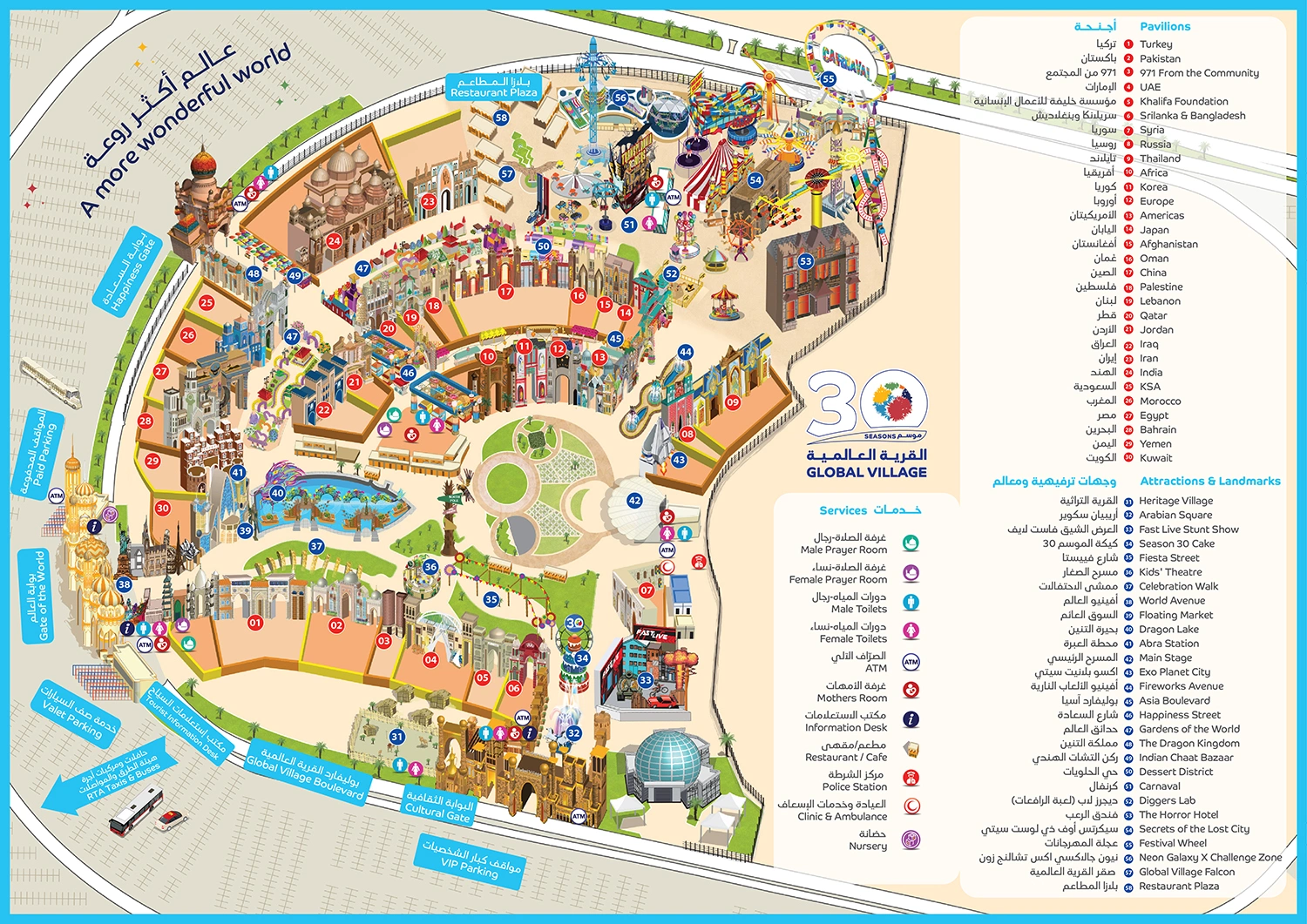
This themed area transports visitors into a magical world with unique architectural designs, specialized entertainment, and distinctive shopping experiences. Fantasy Island typically features whimsical design elements and attractions geared toward creating an enchanted atmosphere.
Modeled after Latin American festivals, Fiesta Street brings vibrant colors, lively music, and festive energy. This zone showcases Latin American culture through its design, food offerings, and entertainment.
Dedicated zones celebrate Emirati heritage and traditions, offering visitors insight into the UAE's rich cultural history through exhibits, traditional architecture, and cultural demonstrations.
Inspired by Asian floating markets, this unique area features water-based stalls and creates an atmospheric shopping experience reminiscent of traditional river markets in Thailand and other Southeast Asian countries.
By Season:
Early Season (October-November): Advantages:
Disadvantages:
Peak Season (December-February): Advantages:
Disadvantages:
Late Season (March-April): Advantages:
Disadvantages:
Weekdays (Saturday-Wednesday):
Thursdays:
Fridays:
4:00-6:00 PM (Early Arrival):
6:00-8:00 PM (Prime Time):
8:00-10:00 PM (Peak Hours):
10:00 PM-Closing (Late Evening):
October-November:
December-February:
March-April:
Rain Contingency: While rare, rain can occur. Most pavilions are covered, but pathways are open-air. Light rain doesn't typically halt operations, but heavy rain may pause entertainment and rides temporarily.
Route Planning:
From Dubai Marina/JBR:
From Downtown Dubai/Burj Khalifa:
From Abu Dhabi:
Parking Information:
Free Standard Parking:
VIP Parking (AED 50):
Parking Tips:
Cost Estimates:
From Dubai Marina: AED 60-80 From Downtown Dubai: AED 40-60 From Dubai International Airport: AED 70-90 From Abu Dhabi: AED 200-250
Surge Pricing: Expect surge pricing on ride-sharing apps (Uber, Careem) during peak hours, particularly Friday evenings and special events. Prices can increase 1.5x to 2x normal rates.
Pickup Considerations:
RTA Bus Service:
Route 104:
Journey Times:
Fares:
Schedule: Buses typically run from 2:00 PM until after park closing to accommodate visitors. Check RTA website or apps (Dubai Metro, RTA) for real-time schedules.
Advantages:
Disadvantages:
Many tour operators offer Global Village packages:
Typical Inclusions:
Costs:
Advantages:
Disadvantages:
For international visitors planning to experience Global Village, securing appropriate UAE entry permissions is essential. Understanding visa requirements, application processes, and entry procedures ensures smooth travel.
Visa-Free Entry (90 Days): Citizens of specific countries receive visa-free entry stamps upon arrival:
Duration: Typically 30 or 90 days depending on nationality, with possible extension options.
Visa on Arrival (30 Days): Citizens of certain countries qualify for visa on arrival at UAE ports of entry:
Duration: Typically 14 or 30 days with possible extension.
Pre-Arranged Tourist Visa (Required for Most): Citizens from most countries worldwide require pre-arranged tourist visas obtained before travel.
30-Day Single Entry Tourist Visa:
90-Day Single Entry Tourist Visa:
Multiple Entry Tourist Visa:
Express Processing: Emergency or urgent processing available at additional cost, reducing processing time from 3-5 business days to 1-2 business days.
Passport:
Photographs:
Completed Application Form:
Flight Bookings:
Hotel Reservations:
Travel Insurance (Highly Recommended):
Financial Proof (Sometimes Required):
Step 1: Determine Visa Type Required Confirm your nationality's specific requirements through UAE embassy websites or reputable visa service providers.
Step 2: Gather Required Documents Collect all necessary documentation, ensuring everything is current, accurate, and complete.
Step 3: Choose Application Method
Option A: Through Airlines Many airlines flying to UAE offer visa services:
Process: Submit application through airline's visa portal, pay fees, receive visa electronically before travel.
Option B: Through Hotels Many UAE hotels, especially larger chains, offer visa sponsorship:
Option C: Through Professional Visa Service Providers Companies specializing in UAE visa services (like Gulf Visa Services) offer:
Advantages:
Step 4: Pay Visa Fees Visa costs vary by type and processing speed:
Step 5: Submit Application Applications typically submitted online through chosen channel. Ensure all information matches passport exactly—discrepancies cause rejections.
Step 6: Track Application Status Most services provide tracking systems. Processing typically takes 3-5 business days for standard processing.
Step 7: Receive Visa Approved visas issued electronically (e-visa) sent via email. Print multiple copies:
Upon Arrival:
Immigration Counters:
Customs Declaration:
Processing Time:
Tips for Smooth Entry:
Visa Extension: Tourist visas can sometimes be extended:
Overstay Penalties: Overstaying UAE visa results in significant penalties:
COVID-19 and Health Requirements: Requirements change periodically. As of early 2026, verify current requirements:
Check UAE official government websites or consult visa service providers for latest requirements.
Travel Insurance: Even when not mandatory, travel insurance is highly recommended covering:
Children and Family Visas:
Previous Travel History:
Security Presence:
Emergency Services:
Child Safety:
Lost Child Protocol:
Prevention Tips:
Personal Safety:
Global Village is generally very safe with minimal crime. Common-sense precautions:
Health Considerations:
Walking: Expect to walk 5-10 kilometers during a comprehensive visit. Comfortable, supportive footwear is non-negotiable. Blisters can ruin an evening.
Hydration: Even in cooler months, walking and shopping causes dehydration. Water stations available, or purchase bottled water regularly (AED 3-5).
Food Safety: Food vendors undergo health inspections. Stick to busy stalls with high turnover. Hot food should be steaming, cold items properly refrigerated.
Medical Concerns: First aid stations handle minor injuries and illnesses. For serious medical issues, Dubai's hospitals provide world-class care (bring travel insurance card).
Dress Code: While not strictly enforced as in mosques, modest dress respects local customs:
Photography:
Public Behavior:
Cultural Interactions:
Alcohol: No alcohol sold at Global Village. Arriving intoxicated may result in denied entry.
Ramadan Considerations: During Ramadan (February-March 2026), respect fasting hours:
Physical Accessibility:
Wheelchair Access:
Wheelchair Rental: Limited wheelchairs available at information centers (first-come, first-served). Consider bringing your own for guarantee.
Parking: Designated parking for people of determination near entrances.
Mobility Scooters: Personal mobility scooters permitted. Rental may be available (check beforehand).
Visual Impairments:
Hearing Impairments:
Assistance: Staff at information centers help coordinate accessibility needs. Contact Global Village ahead for complex requirements.
Restrooms: Clean, well-maintained restroom facilities throughout park. Peak times may involve queues, especially women's facilities. Baby changing stations available.
Prayer Rooms: Dedicated prayer facilities for Muslim visitors, with separate areas for men and women. Wudu (ablution) facilities included.
ATMs: Multiple ATMs throughout venue accepting international cards. Carry backup cash as machines occasionally run out during peak periods.
Phone Charging: Limited charging stations available. Bring portable power banks for heavy phone use (photos, navigation, etc.).
WiFi: Free WiFi available throughout venue, though connectivity can be spotty during peak crowding. Coverage varies by location.
Lockers: Locker facilities may be available for storing purchases or personal items. Inquire at information centers.
First Aid: Clearly marked first aid stations staffed by trained personnel. Services include basic medical care, minor injury treatment, medication for common ailments.
Information Centers: Located at main entrances and strategic points, staffed by multilingual personnel assisting with:
Lost and Found: Report lost items to information centers. Claim found items with proper identification.
Family with Young Children (4-6 Hours):
4:00 PM - Arrival: Enter during quieter early hours. Take family photo at entrance.
4:15 PM - Kids Zone: Head directly to kids' attractions while children are fresh. Enjoy age-appropriate rides (1-1.5 hours).
5:30 PM - Cultural Exploration: Visit 3-4 pavilions children will enjoy:
6:30 PM - Early Dinner: Dine before peak dinner rush. Choose familiar items for picky eaters while encouraging trying new flavors.
7:30 PM - Main Stage Show: Catch family-friendly performance. Arrive early for good seats.
8:15 PM - Easy Carnival Rides: Family ferris wheel, carousel, gentle rides all can enjoy together.
9:00 PM - Sweet Treats: Turkish ice cream or Belgian waffles as special treat.
9:30 PM - Departure: Exit before children become overtired. Avoid meltdowns and traffic.
Couples/Young Adults (5-7 Hours):
6:00 PM - Arrival: Arrive as atmosphere builds but before peak crowds.
6:15 PM - Strategic Shopping: Hit pavilions of interest first while energy is high:
8:00 PM - Culinary Adventure: Sample foods from multiple countries—make this a progressive dinner:
9:00 PM - Main Entertainment: Catch major stage show—acrobatic or dance spectacular.
10:00 PM - Thrill Rides: Ride carnival attractions—roller coaster, drop tower, extreme rides.
11:00 PM - Late Evening Shopping: Return to pavilions for final negotiations or purchases missed earlier.
11:45 PM - Departure: Exit before midnight closing, avoiding exit traffic crush.
Solo Traveler/Photography Enthusiast (6-8 Hours):
4:00 PM - Golden Hour Arrival: Arrive at opening for best photography light and minimal crowds.
4:15 PM - Architectural Photography: Photograph pavilion exteriors with afternoon sun:
5:30 PM - Cultural Immersion: Deep dive into 3-4 pavilions of strong personal interest:
7:00 PM - Sunset and Lights: Position for sunset photos. Stay as lights activate—magical transformation. Photograph illuminated pavilions.
8:00 PM - Performance Photography: Attend main stage show. With permission, photograph performers (check photography policies).
9:00 PM - Street Photography: Capture evening atmosphere:
10:00 PM - Dinner: Relaxed solo dining, people-watching while eating.
10:45 PM - Night Photography: Long exposures of rides, light trails, illuminated pathways.
11:30 PM - Departure: Satisfied with comprehensive photographic coverage.
Shoppers/Bargain Hunters (5-6 Hours):
5:00 PM - Strategic Entry: Arrive with shopping list and budget clearly defined.
5:15 PM - Pavilion Circuit 1: Visit first round of target pavilions:
6:30 PM - Quick Dinner: Fast food to fuel shopping marathon.
7:00 PM - Pavilion Circuit 2: Return to pavilions with serious negotiation:
8:30 PM - New Territory: Explore pavilions not on original list—discover unexpected treasures.
9:30 PM - Final Negotiations: Return to vendors for final purchases, last-chance bargaining.
10:30 PM - Departure: Exit with bags full of purchases at great prices.
1. Eat Before or After: Having main meal before arrival or after departure saves AED 50-100 per person. Global Village food, while delicious, is marked up compared to outside restaurants.
2. Bring Refillable Water Bottle: Water stations available. Save AED 20-40 per person by refilling rather than buying bottled water repeatedly.
3. Weekday Visits: Besides crowds, weekday visits mean vendors more eager to negotiate, potentially saving 10-20% compared to busy Fridays.
4. Buy Similar Items Together: Purchasing multiple similar items (several scarves, multiple spice packets) from one vendor enables bulk discounts.
5. End-of-Season: Final weeks (late March/early April) feature vendors more willing to reduce prices significantly to avoid transporting unsold inventory home.
6. Skip VIP Parking: Unless truly necessary, standard parking is free and walking distance is manageable, saving AED 50.
7. Selective Ride Strategy: If planning rides, prioritize favorites rather than trying everything. Unlimited wristbands rarely provide value unless planning 8+ rides.
8. Carry Cash: Some vendors offer small cash discounts (3-5%) to avoid card processing fees.
9. Group Purchases: Shopping with friends allows splitting larger items or bulk purchases for better per-unit pricing.
10. Entertainment is Included: Remember shows, cultural performances, and wandering itself are included in entry—don't feel pressured to spend beyond entry fee to have wonderful time.
Equipment:
Best Photo Opportunities:
4:00-5:30 PM (Golden Hour):
Sunset (Around 6:00 PM):
Evening (7:00-10:00 PM):
Photography Subjects:
Etiquette:
Can we bring outside food? Outside food generally not permitted except baby food and items for medical/dietary needs. Dubai Municipality regulations apply.
Is there a dress code? No strict code, but modest clothing respecting local culture is appropriate. Cover shoulders and knees as general guideline.
Can we smoke? Designated smoking areas only. Smoking in crowded pavilions or while walking prohibited. Heavy fines for violations.
Are bags checked? Yes, all bags undergo security screening at entrance. Prohibited items confiscated (weapons, drugs, large bags, professional camera equipment without permission).
Can we leave and re-enter? Typically no. Plan to stay for full visit duration. Emergency exits possible but re-entry not guaranteed.
Is it suitable for elderly visitors? Yes, though significant walking required. VIP parking, wheelchairs, and frequent seating areas help. Consider visiting during quieter times.
What if we lose someone? Immediately notify information center or security. Lost child protocol activates quickly. Establish meeting points beforehand.
Are there baby facilities? Yes, baby changing stations in restrooms. Formula heating and feeding areas available at family service points.
Can we book pavilion space for private events? Global Village hosts corporate events and private functions. Contact their events department for information and pricing.
Is Global Village accessible by metro? Not directly—nearest metro stations several kilometers away. However, dedicated buses from metro stations provide connections.
What happens if it rains? Light rain typically doesn't affect operations. Heavy rain may pause entertainment and rides temporarily. Most pavilions offer shelter.
Global Village represents more than entertainment—it's a philosophy. In an increasingly divided world, this seasonal attraction proves that diverse cultures can coexist, celebrate differences, and find common ground through shared human experiences of food, art, commerce, and celebration.
For tourists, Global Village offers authentic cultural immersion compressed into one evening—a genuine taste of nations you might never visit otherwise. For Dubai residents, it provides an annual tradition marking winter's arrival, offering familiar pleasures and new discoveries each season.
Approach Global Village with openness. Engage with vendors beyond transactions—ask about their countries, learn cultural practices, understand the stories behind handicrafts. Try foods you can't pronounce. Watch performances from traditions unfamiliar to you. Navigate the world not as a tourist checking boxes, but as a temporary citizen of this remarkable temporary city.
Budget your time and money, certainly, but also budget wonder. Allow moments of serendipity. The unplanned discovery of a hidden pavilion, an unexpected conversation, a flavor completely new—these unstructured experiences often become most treasured memories.
For international visitors, securing your UAE visa is the first step in this adventure. Professional visa services like Gulf Visa Services streamline the process, handling complexity while you focus on planning your Global Village experience and broader Dubai exploration.
As you wander through recreated international bazaars, watching Turkish ice cream theater, negotiating for Moroccan lanterns, tasting Filipino barbecue, and riding illuminated ferris wheels against the Dubai sky, you're participating in something special—a celebration of human diversity, creativity, and our universal capacity for joy.
Global Village 2026 awaits. Whether you visit once or weekly throughout the season, each visit offers new perspectives, discoveries, and memories. This isn't just a theme park or shopping destination—it's a temporary world where boundaries dissolve and culture flows freely.
Plan carefully, but don't over-plan. Research thoroughly, but leave room for spontaneity. Budget smartly, but invest in experiences. And most importantly, arrive with curiosity, leave with memories, and carry forward the spirit of cultural appreciation that Global Village so magnificently embodies.
Safe travels, happy exploring, and may your Global Village journey be filled with wonder, discovery, and the kind of magic that only comes from experiencing the whole world in one extraordinary evening.